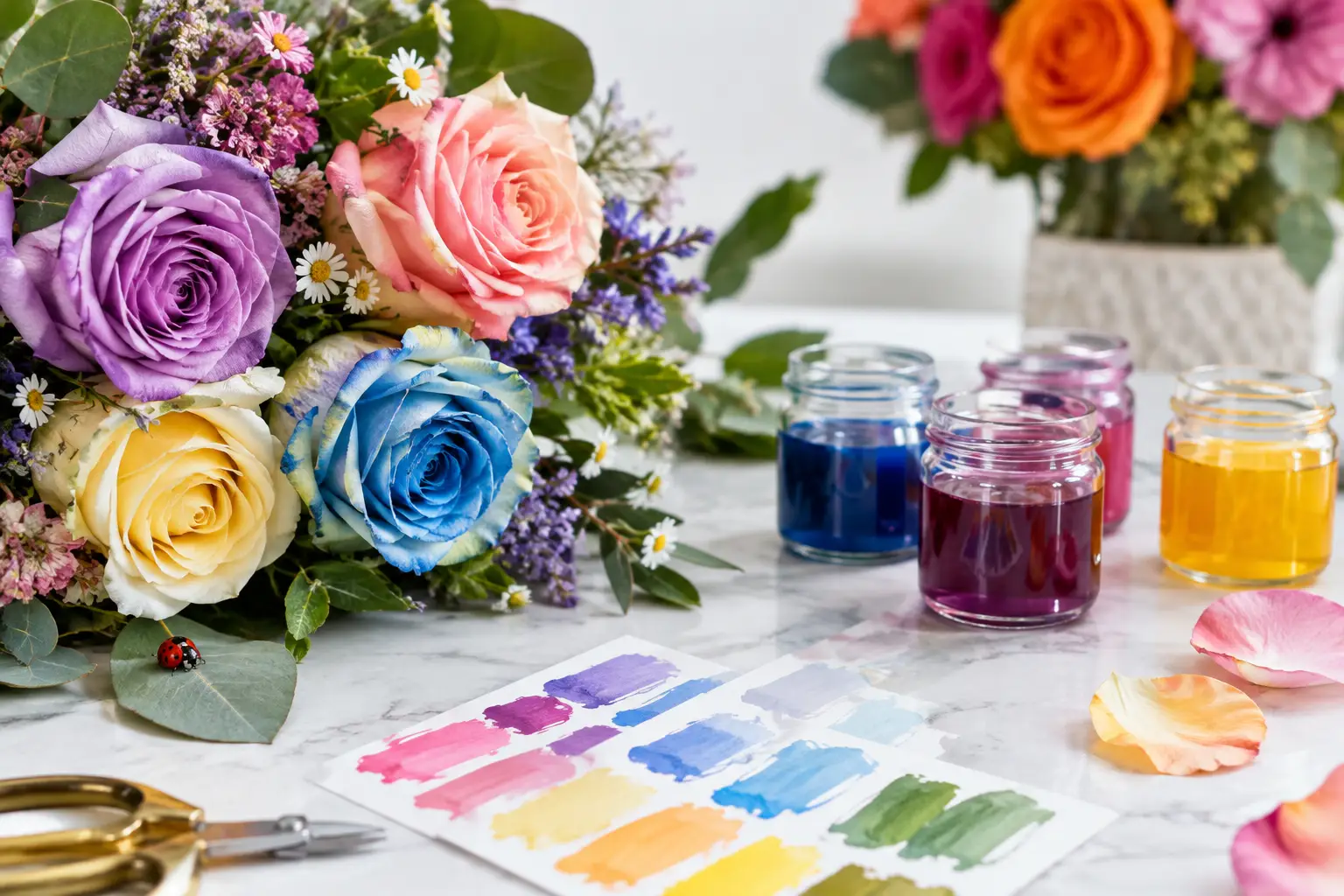
A photo of the exact dusty blue, terracotta, or deep wine shade you have in mind can make planning feel wonderfully clear. But can florists make custom colors? Often, yes – with thoughtful flower selection, design techniques, and a realistic understanding of what fresh flowers can and cannot do. The goal is not simply to find a bloom with the right name. It is to create an arrangement that feels like your color story.
Can Florists Make Custom Colors?
Florists can create a custom color palette, match many specific shades closely, and sometimes alter the color of certain flowers. What is possible depends on the flower variety, the season, the requested shade, and whether the flowers are intended for a gift arrangement, wedding, memorial tribute, or another special occasion.
Fresh flowers are natural products. Their color can vary from farm to farm and week to week, even within the same variety. A blush rose may arrive with peach undertones one week and a softer pink cast the next. That variation is part of what makes fresh floral design feel alive, but it also means an exact paint-chip match is not always realistic.
A skilled florist works around that challenge by considering the full arrangement. The focal flowers, supporting blooms, foliage, ribbon, container, and overall balance can work together to make a particular shade feel present, even if every individual stem is not an exact match.
Custom Color Is More Than One Exact Shade
When customers ask for a custom color, they may mean different things. Someone planning a wedding might need flowers that complement bridesmaid dresses. A person sending birthday flowers may want a favorite shade of lavender or sunny yellow. For a celebration of life, a family may request their loved one’s signature color or a palette that feels gentle and personal.
In each case, a florist starts by identifying the mood behind the color. Is the request for a warm, romantic blush palette? A crisp white-and-green design? A rich autumn arrangement with burgundy, rust, and plum? Knowing the feeling matters because several combinations of flowers may achieve the same effect.
For example, a request for “dusty blue flowers” does not necessarily mean every flower must be blue. Fresh blue blooms can be limited, especially at certain times of year. A designer may create the look with blue-toned accents, silvery foliage, pale lavender flowers, cool white blooms, and a blue ribbon or vase. The finished piece can feel intentionally blue without looking artificially uniform.
How Florists Build a Personalized Palette
The best custom work begins with a conversation. A florist will usually ask for a color reference, the occasion, the recipient’s preferences, the desired arrangement size, and the delivery or event date. A clear photo is especially useful, whether it is a dress swatch, room color, invitation, favorite outfit, or inspiration image.
From there, the designer considers what is naturally available. Roses, carnations, mums, hydrangeas, lilies, orchids, tulips, ranunculus, and seasonal flowers all offer different color ranges. Some flowers are dependable for particular hues, while others are more variable or only available during certain seasons.
Texture helps bridge small differences in shade. Cream flowers can soften bright white. Mauve and lavender can make pale pink feel more sophisticated. Deep greenery can ground a vivid palette, while airy foliage creates a lighter, garden-inspired look. This is why a custom arrangement can feel beautifully coordinated even when it does not use identical shades throughout.
At RoseAmongThorns, this design-minded approach is especially helpful when a customer has a meaningful vision but is unsure which flowers will bring it to life. A good florist translates the inspiration into a design that looks polished, natural, and appropriate for the moment.
When Flowers Can Be Tinted or Enhanced
Some flowers can be tinted, dyed, painted, or otherwise color-enhanced to achieve shades that are rare in nature. These options can be useful for bold party themes, school colors, holiday displays, creative photo moments, and certain event designs.
Tinted flowers work by drawing color through their stems or by receiving a surface treatment. White or pale flowers are often used because the added color shows more clearly. The final result can be playful and striking, but it is not the same as a naturally grown bloom. It may have a more stylized appearance, and the color can vary slightly across petals.
For many customers, enhanced flowers are a great fit. If you are hoping for vivid turquoise, true blue, black, rainbow, or another highly specific shade, they may be the best way to get close to the look you want. For a soft, natural wedding palette or a traditional sympathy tribute, naturally colored flowers often offer a more timeless result.
Your florist can help you weigh the trade-off. The question is not whether one choice is better than the other. It is whether the finished design should look bold and artistic, softly natural, or somewhere in between.
Why Season and Lead Time Matter
Custom color requests are easiest to fulfill when the florist has enough notice. Early planning gives the shop more flexibility to source specific varieties, coordinate color families, and suggest alternatives before a favorite flower becomes unavailable.
This matters most for weddings, large events, and sympathy pieces with a detailed vision. A palette that includes specialty roses, unusual orchids, or a narrow range of shades may require advance ordering. It also helps to stay open to substitutions. A thoughtful substitute can preserve the overall color story while keeping the flowers fresh and beautiful.
For same-day or last-minute flower delivery, a florist can still create something personal. The approach may shift from sourcing an exact variety to designing from the best flowers currently in the shop. In those cases, sharing your preferred colors and what you do not want is often more helpful than requesting a precise stem-by-stem recipe.
Tips for Requesting a Custom Flower Color
Bring a visual reference whenever possible. Screens can display colors differently, but a photo still gives a florist a strong starting point. If the color is important for an event, provide a fabric swatch or printed sample as well.
It also helps to describe your flexibility. You might say, “I would love soft sage and ivory, but I am open to light green foliage and cream flowers,” or “The overall look should feel like sunset, with coral, peach, and warm pink.” That gives the designer room to use the freshest, most beautiful stems while staying faithful to your vision.
Be direct about colors to avoid, too. If the recipient dislikes yellow, if bright red feels too romantic for the occasion, or if a memorial design should remain soft and understated, those details matter. Florists are not only matching colors. They are designing for the relationship and the message you want the flowers to carry.
The Beauty of a Custom Floral Design
A custom color palette does not have to be exact to be meaningful. In fact, the most memorable arrangements often have subtle variations that make them feel gathered, dimensional, and made just for one person. A florist’s expertise lies in seeing how those tones will work together before the first stem is placed.
If a color holds a memory, marks a milestone, or simply makes someone smile, share that story with your florist. A few details can turn a color request into flowers that feel personal from the moment they arrive.