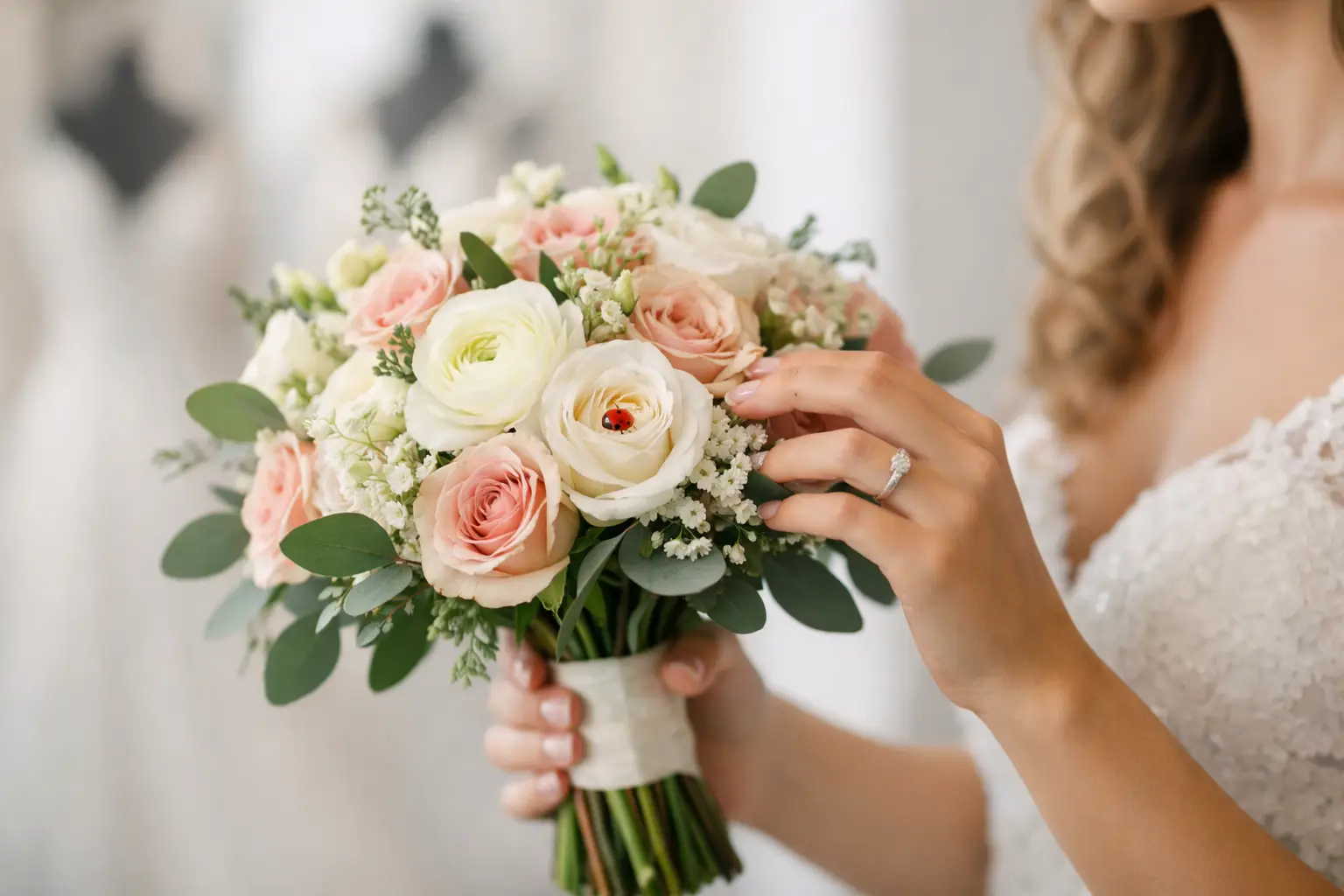
Your bridal bouquet will appear in some of the closest, most lasting photographs of your wedding day: held against your dress, passed to a loved one during the ceremony, and set beside you at the head table. Knowing how to choose bridal bouquet flowers is less about following a trend and more about finding a design that feels natural in your hands and true to your celebration.
The right bouquet does not have to be the largest, most expensive, or most dramatic arrangement in the room. It should complement you, photograph beautifully, and hold up through a full day of happy tears, hugs, and dancing. A thoughtful florist can help with every detail, but a few early decisions will make the process much easier.
Start With the Feeling You Want to Create
Before naming specific flowers, think about the atmosphere of your wedding. Is it garden-inspired and relaxed, modern and polished, romantic and candlelit, or classic and formal? Your bouquet can quietly set that tone.
A loose garden bouquet with airy greenery, sweet peas, and softly opening roses feels very different from a structured design of calla lilies or orchids. Neither is better. The choice depends on the mood you want guests to feel when they enter the room and the way you want to remember the day.
Collect a small group of images that genuinely speak to you, rather than saving every beautiful bouquet you see. Look for patterns in the photos. You may notice that you are drawn to movement, texture, crisp white blooms, warm neutral colors, or a particular flower shape. Those preferences give your florist a much clearer starting point than one exact inspiration photo alone.
Let Your Dress Guide the Bouquet Shape
Your gown and bouquet should feel like they belong together. The silhouette, fabric, and detail of your dress are often the best clues for choosing the right scale and shape.
A fitted, minimalist gown can carry a sleek calla lily bouquet, a compact all-rose design, or a modern gathering of orchids. A ball gown or dress with a fuller skirt usually has room for a more generous bouquet with layered blooms and greenery. For a lace gown or a softly flowing dress, a garden-style bouquet with varied textures can echo that romantic detail without looking overly arranged.
Pay attention to where the bouquet will sit when you hold it. Petite brides can be overwhelmed by a very wide, heavy arrangement, while a tall bride may want more presence than a small posy provides. This is not a rulebook. It is a matter of balance. Your florist can adjust the diameter, stem length, and flower selection so the bouquet feels proportional when you are standing, walking, and posing.
Consider Your Veil and Accessories
If your veil has intricate lace, pearl details, or embroidered edging, choose flowers that support those details instead of competing with them. A bouquet with too many unrelated colors or textures can make the overall look feel busy. The same goes for statement earrings, a dramatic neckline, or an embellished belt.
A simple bouquet does not mean a plain bouquet. A restrained palette of white flowers can still feel rich through different petal shapes, foliage, and subtle tonal variation.
Choose a Color Palette, Not Just One Color
A bridal bouquet is usually most successful when it connects to the larger wedding palette without matching every detail exactly. If your attendants are wearing dusty blue, for example, you do not need blue flowers in every bouquet. You might use creamy flowers, soft blush tones, and a ribbon that picks up the blue instead.
Begin with one or two main colors, then add a supporting neutral and a little contrast. Ivory, white, soft green, taupe, and muted blush are often easy companions because they blend well with many settings. For a bolder look, a florist can use a focused accent such as burgundy, coral, saffron, or deep plum to create depth.
Consider the setting as well. Bright outdoor light can make pale flowers look wonderfully fresh, while a dim indoor venue may call for more contrast so the bouquet does not disappear in photographs. If your ceremony and reception take place in different spaces, choose flowers that work in both rather than designing only for one backdrop.
Select Flowers for the Season and Your Priorities
It is tempting to begin with a list of favorite blooms, and you absolutely should share those favorites. Still, flower availability changes with the season, growing conditions, and market supply. A flexible approach usually creates a more beautiful bouquet and a healthier budget.
Garden roses, ranunculus, peonies, dahlias, tulips, hydrangea, anemones, lisianthus, and orchids each bring a distinct personality to a design. Some are seasonal favorites. Others are often available year-round but can vary in color, quality, and price. Your florist can suggest alternatives that preserve the look you love if a particular flower is unavailable or unusually costly.
Prioritize what matters most. If peonies have sentimental meaning, you may decide they are worth including even if they are a premium choice for your date. If color and overall softness matter more than a specific bloom, you will have more flexibility to use flowers at their best.
Be Honest About Your Budget
Your bouquet deserves a clear place in your floral budget because it will be photographed frequently and handled throughout the day. The price reflects more than the stems themselves. It includes design time, careful conditioning, mechanics, ribbon treatment, and the expertise required to build an arrangement that stays beautiful.
A florist can create impact at many price points, but the design approach may change. A smaller bouquet with premium focal flowers can feel more elevated than a larger bouquet filled with blooms you do not love. Using seasonal flowers and a focused color palette can also stretch the budget without sacrificing artistry.
Think About Movement, Texture, and Scent
The flowers in a bouquet are not just seen. You will carry them close, feel their weight, and likely catch their fragrance throughout the day. Ask yourself whether you prefer a compact, tidy shape or something with a little wildness and movement.
Textural elements such as delicate greenery, berries, scabiosa pods, flowering branches, or trailing ribbons can make a bouquet feel personal and dimensional. They are especially helpful if you love a garden-inspired style but do not want an oversized arrangement.
Scent is worth discussing, particularly for an intimate ceremony or if you are sensitive to fragrance. Sweet peas, stock, garden roses, freesia, and lilies can be beautifully fragrant, but heavily scented flowers are not ideal for everyone. A balanced bouquet can include a few fragrant stems without becoming overpowering.
Plan for Comfort and Real Wedding-Day Conditions
A bouquet should be beautiful, but it also needs to be practical. It may be carried outdoors in Missouri summer heat, held during a long ceremony, placed in a vase between photos, and transported from one location to another. Certain flowers are better suited to those conditions than others.
Tell your florist about your ceremony time, travel plans, and whether photos are taking place before the ceremony. If you are marrying outdoors in warmer weather, they may recommend more durable varieties and keep more delicate blooms protected until the right moment. If you want a cascading bouquet, make sure it is designed at a comfortable size and weight for you to carry with ease.
It also helps to decide whether you want to preserve your bouquet afterward. Some flowers dry more successfully than others, and preservation plans may affect how you handle the bouquet after the wedding.
Bring Your Florist the Right Details
A productive floral consultation does not require you to know flower names. Bring photos of your dress, bridesmaid attire, venue, stationery, and any meaningful heirlooms or accessories. Share your wedding date, color preferences, approximate budget, and the number of personal flowers you need, including boutonnieres, corsages, and bouquets for attendants.
Be clear about what you do not want, too. If you dislike eucalyptus, bright pink, a tightly packed round shape, or a certain flower, saying so early prevents guesswork. Then give your designer room to work with seasonal flowers and their own trained eye. The strongest bouquets are often inspired by a vision, not copied stem for stem from a photo taken in a different season or climate.
For Springfield couples, RoseAmongThorns can translate your ideas into a handcrafted bouquet that considers your venue, wedding-day schedule, and the people standing beside you. The goal is not simply to hand you flowers. It is to create a piece of the day that feels considered, personal, and easy to carry into every memory.
When you choose a bridal bouquet, trust the details you keep coming back to: the colors that make you smile, the flowers with meaning, and the shape that makes you feel most like yourself. That quiet sense of recognition is often the best sign you have found the right one.
Add Comment