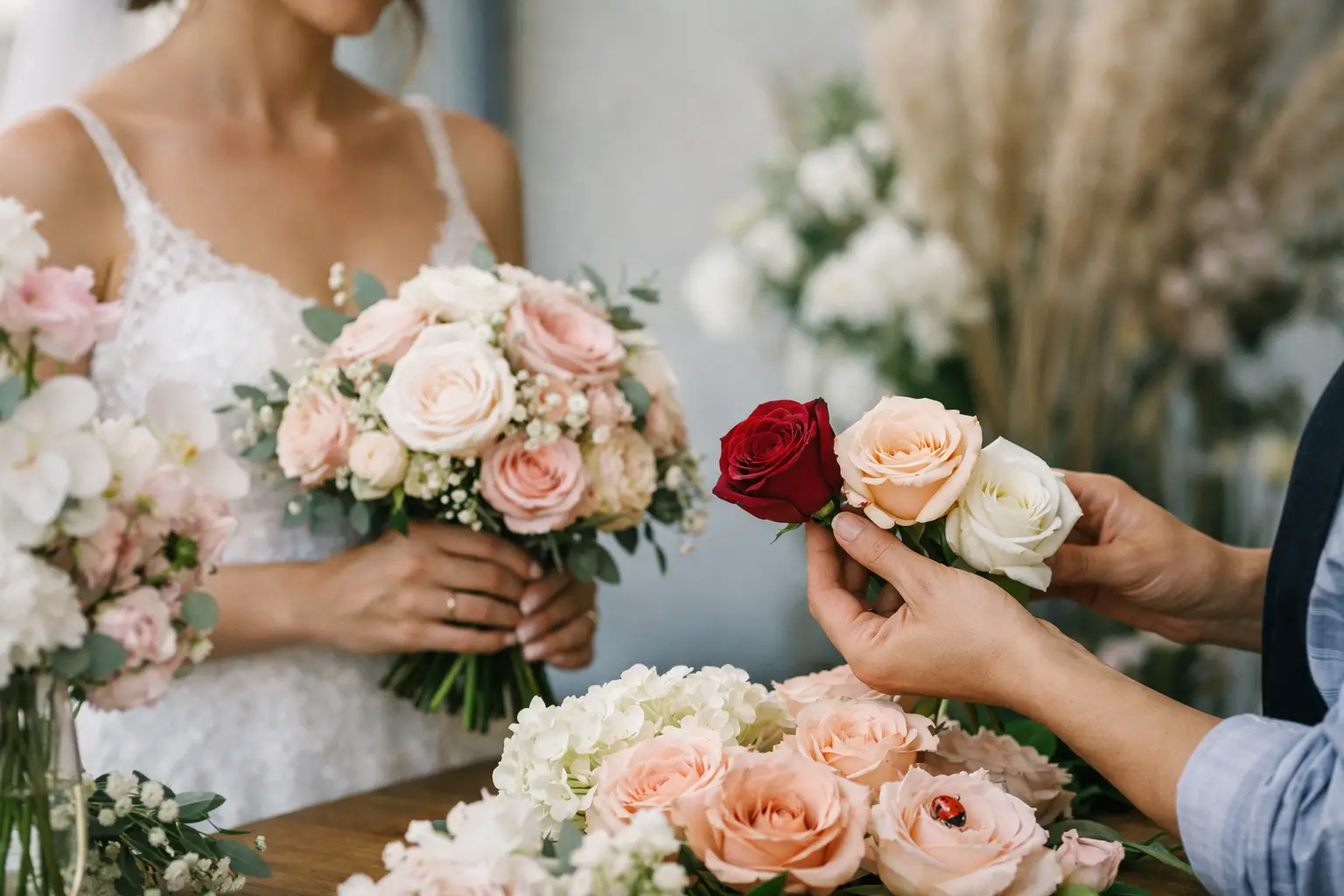
You do not need to know the name of every bloom to figure out how to pick wedding florals. What you do need is a clear sense of how you want the day to feel when you walk into the room, hold your bouquet, and see your people gathered around you. The right flowers are not just pretty details. They set the tone, soften the space, and help the whole celebration feel intentional.
For some couples, that means garden-style arrangements with movement and texture. For others, it means clean white blooms, restrained greenery, and a look that feels tailored and polished. Both are beautiful. The key is choosing florals that make sense for your venue, your priorities, and your budget instead of chasing every trend you see online.
Start with the feeling, not the flower list
One of the easiest ways to get overwhelmed is to begin with specific stems before you know your overall direction. If you start by saying you need peonies, ranunculus, roses, hydrangeas, orchids, and baby’s breath, you can end up with a collection of flowers that do not actually belong together. A better place to begin is with mood.
Ask yourself a few simple questions. Do you want the wedding to feel romantic and soft, modern and minimal, colorful and playful, or timeless and formal? Do you picture abundant florals that create a full, lush atmosphere, or are flowers more of an accent to the larger design? Those answers will guide every choice that follows.
This is also where color matters. Your floral palette does not have to match every linen and dress exactly, but it should feel at home with the rest of the day. If your venue is already visually busy, a restrained palette may help. If the space is simple, flowers can do more of the storytelling.
How to pick wedding florals for your venue
Your venue quietly shapes almost every floral decision. A candlelit ballroom can hold richer arrangements and more formal designs. A bright chapel or outdoor garden often feels best with lighter movement and softer shapes. In a rustic barn, flowers may need to bridge the gap between casual architecture and a more refined wedding style.
Scale is just as important as style. A large ceremony space can make modest arrangements disappear, while a smaller room can feel crowded fast. This is one of the biggest trade-offs couples run into. They may love a dramatic floral installation online, but if the room is intimate, that same idea can feel too heavy. On the other hand, going too small in a grand venue can leave the design feeling unfinished.
Think about where flowers will actually be seen. Ceremony backdrops, entry tables, bar arrangements, and reception centerpieces all serve different purposes. Sometimes the smartest choice is to invest in one or two high-impact areas instead of spreading the budget thin across every surface.
Let the season work in your favor
Seasonality affects both cost and look. When flowers are naturally in season, they are often more available, more vibrant, and more practical for the time of year. That does not mean you are limited to a tiny menu of stems, but flexibility usually pays off.
Spring tends to bring the airy, romantic blooms many couples love. Summer can handle brighter color and fuller designs. Fall naturally leans textured, warm, and layered. Winter weddings often look especially elegant with classic blooms, deeper tones, or clean whites with evergreen accents.
If you have your heart set on one specific flower, share that early with your florist, but stay open to comparable options. A skilled designer can often suggest a bloom that gives you a similar shape, softness, or movement without forcing the entire floral plan around one hard-to-source choice.
Decide where florals matter most
Not every wedding needs flowers everywhere. That is one of the most useful things to remember when working through floral decisions. If the bouquet is deeply important to you, give it room in the budget. If guest tables are a major part of the experience, focus there. If your ceremony photos matter most, invest in the altar area and aisle moments.
Typically, personal flowers come first. That includes the bridal bouquet, bridesmaid bouquets, boutonnieres, corsages, and any floral accents for family members. From there, couples usually look at ceremony flowers, then reception pieces.
This order helps because personal flowers are seen up close and photographed often. They are also the flowers you physically carry and wear, so they tend to have emotional weight beyond decor. Reception florals still matter, of course, but they can often be designed more strategically depending on guest count, table size, and what else is happening in the room.
How to pick wedding florals without losing your budget
Most couples do not have an unlimited floral budget, and that is completely normal. Beautiful wedding flowers are possible at many price points, but priorities need to be clear. The challenge is not whether you can have wedding florals. It is how to use your budget where it will have the most impact.
Full, premium-heavy designs cost more. Large installations cost more. Designs that require labor-intensive mechanics cost more. Repurposing can help, but it depends on timing, staffing, and how easily pieces can be moved from ceremony to reception.
If you want to stretch the budget, focus on a balanced plan instead of cutting everything small. A lush bridal bouquet paired with simpler attendants’ bouquets often works well. A statement arrangement at the ceremony can sometimes be reused at the head table or sweetheart table. Greenery can add volume, but it is not always a cheap fix, especially if the design still needs fullness and shape.
The best floral budgets are honest ones. Share your range early. A good florist can guide you toward choices that feel polished and intentional instead of pieced together.
Choose a floral style that still feels like you in photos
Trends can be fun, and there is nothing wrong with loving what is current. Still, wedding flowers tend to age better when they reflect your taste rather than the internet’s mood of the moment. If you are naturally drawn to classic designs, you do not need to force a wild asymmetrical bouquet just because it is popular. If you love color, you do not have to strip everything back to white and green to look elegant.
This is where inspiration photos help, but only if you use them wisely. Look for patterns in what you save. You may notice that all your favorite bouquets are soft and rounded, or that you keep choosing arrangements with lots of texture and movement. That gives your florist useful direction without boxing the design into an exact copy.
Photos also need context. A bouquet that looks perfect in a styled shoot may be larger, more expensive, or more delicate than it appears. Lighting, editing, and staging can change a lot. It helps to use inspiration as a reference point, not a contract.
Think beyond the bouquet
When couples picture wedding flowers, they often imagine the bouquet first, and that makes sense. But the full floral experience is built from many smaller pieces working together. Ceremony markers, bud vases, cake flowers, welcome sign accents, and bar arrangements can all contribute to the atmosphere.
That said, more is not always better. Sometimes a room feels most elegant when the floral design has breathing room. If every surface is decorated, nothing stands out. A thoughtful floral plan guides the eye and supports the celebration rather than competing with it.
It can also help to think about guest experience. What will people notice when they enter? Where will they take photos? Where will they sit longest? Floral placement is not just about decoration. It shapes how the event feels in real time.
Work with your florist like a creative partner
The strongest wedding florals usually come from collaboration. Come prepared with your date, venue, guest count, inspiration, color ideas, and a realistic budget range. Then leave room for professional guidance. Florists know what performs well in heat, what holds up through a long day, what works in your venue type, and where substitutions may actually improve the design.
This relationship matters because flowers are both artistic and logistical. You are not only choosing colors and shapes. You are planning installation timing, delivery, setup, transport, and freshness across the whole event. That is why personal service matters so much in wedding work. At RoseAmongThorns, those conversations are part of making sure the final designs feel personal, practical, and beautifully finished.
If you are unsure what to ask, start simple. Ask what flowers fit your season. Ask where your budget will go furthest. Ask which pieces will have the biggest visual impact. Those questions usually lead to a much better floral plan than asking for a copy of someone else’s wedding.
When less flowers can still feel special
A smaller floral plan does not mean a less meaningful wedding. In many cases, restraint creates a more refined look. One beautiful bouquet, well-designed centerpieces, and a ceremony focal point can carry the day more effectively than trying to decorate every inch.
What matters most is cohesion. When the flowers feel connected to the space, the attire, and the mood of the celebration, they do their job beautifully. They do not need to be the loudest thing in the room to be memorable.
If you are figuring out how to pick wedding florals, give yourself permission to choose what fits your day instead of what impresses strangers. The best wedding flowers are the ones that make the room feel like your celebration the moment you step into it.