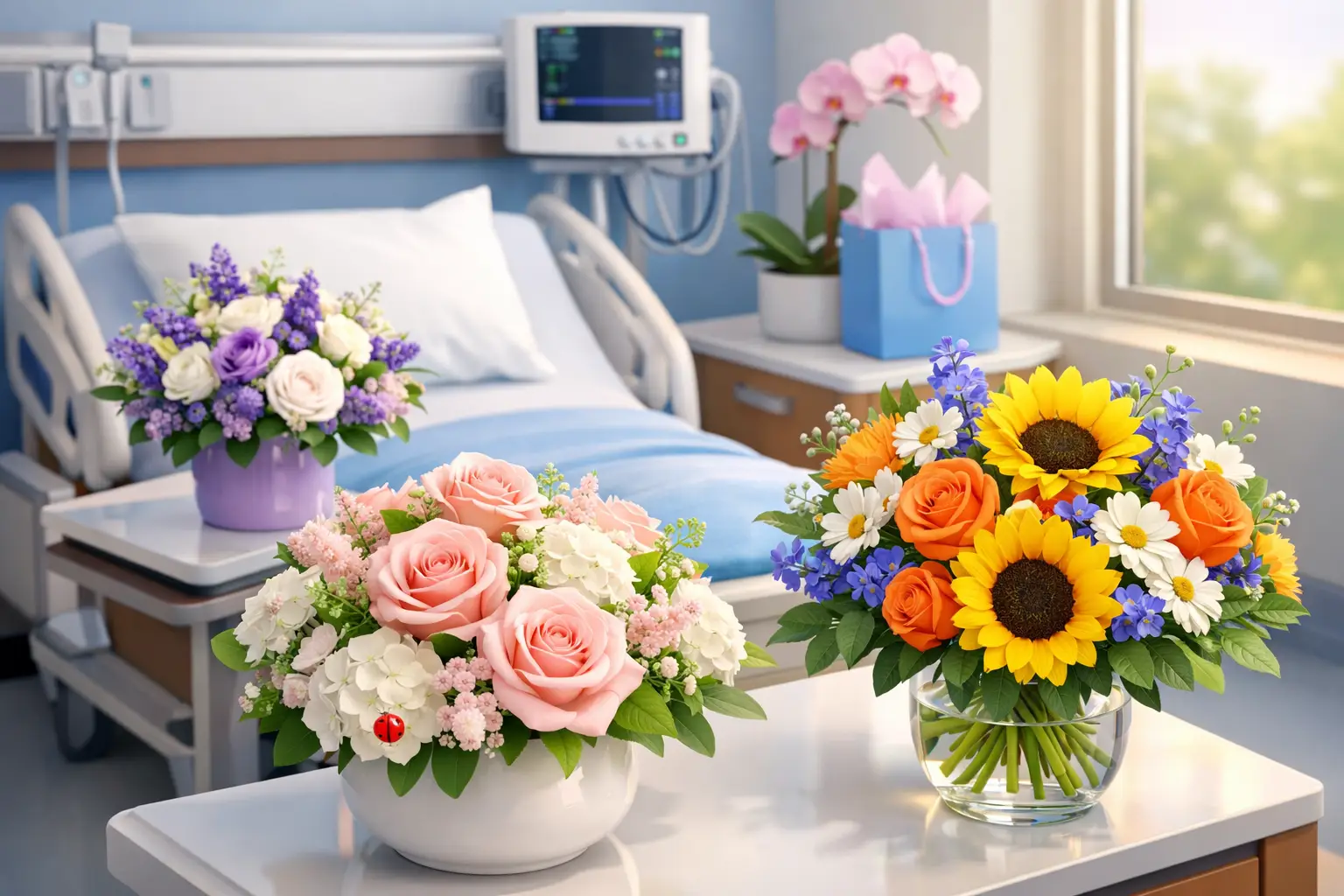
A hospital room has limited space, unfamiliar routines, and plenty of medical equipment. The best flowers for hospital delivery bring a welcome touch of color without making the room harder to navigate, overwhelming a sensitive patient, or conflicting with hospital policies. A thoughtfully chosen arrangement says, “I’m thinking of you,” while respecting what recovery may look like that day.
For someone recovering in Springfield, a locally crafted arrangement also gives you the reassurance that it will be handled with care from the design table to the delivery door. Still, the first step is not choosing a bloom. It is making sure flowers are welcome.
Check the hospital’s flower policy first
Many hospitals allow flowers in standard patient rooms, but policies can vary by facility and even by department. Intensive care units, neonatal units, transplant floors, and areas serving patients with compromised immune systems may not permit fresh flowers, plants, or outside deliveries. Rules may also change during heightened infection-control periods.
Call the hospital’s main desk or the patient’s unit before ordering. Ask whether fresh flowers are permitted, what delivery entrance should be used, and whether the patient can receive gifts in their current room. If you know the room number, share it with the florist, but remember that patients are sometimes moved. Providing the recipient’s full name, a phone number if appropriate, and the hospital name helps make delivery smoother.
If fresh flowers are not allowed, a plush keepsake, a cheerful card, or a carefully selected gift item can still carry the same encouragement. The gesture matters most.
What makes flowers hospital-friendly?
Hospital arrangements work best when they are compact, low-maintenance, and easy to place on a bedside table or windowsill. A design in a stable, self-contained vase is generally more practical than a large bouquet that requires the recipient or staff to find a container, trim stems, and arrange flowers while managing recovery.
Fragrance deserves special consideration. Even a scent that feels lovely at home can be too strong in a small room, particularly for someone dealing with nausea, migraines, respiratory concerns, medication side effects, or fatigue. Choose flowers with little to no fragrance and avoid intensely perfumed varieties when possible.
Color can do a great deal of the emotional work. Sunny yellows, gentle pinks, fresh greens, soft purples, and bright mixed palettes can lift the atmosphere without feeling overly formal. A get-well arrangement does not have to be all yellow, though. If the recipient loves jewel tones, serene pastels, or bold tropical color, a florist can create something that feels personal while remaining appropriate for the setting.
Best flowers for hospital delivery
A skilled florist considers the season, daily flower availability, and the patient’s preferences, but several flowers are especially well suited to hospital arrangements.
Alstroemeria
Alstroemeria, sometimes called Peruvian lily, is a wonderful choice for a get-well design. Its small, colorful blooms add movement and cheer, it is typically low in fragrance, and it has a strong vase life. It also blends beautifully with roses, carnations, daisies, and seasonal accents, giving an arrangement a full, polished look without excessive bulk.
Carnations
Carnations have earned their place in hospital flowers for good reason. They are long-lasting, available in an exceptional range of colors, and gentle in appearance. A modern design with carnations can feel anything but ordinary when paired with textural greens, fresh mums, or a few focal blooms. They are a practical choice when you want your gift to keep brightening the room for days.
Daisies and daisy mums
Daisies bring an easy, optimistic feeling that suits a get-well message. White and yellow daisies are classic, while daisy mums offer a wider range of colors and shapes. They are cheerful without being too romantic or too formal, making them a particularly good option for friends, coworkers, neighbors, and younger recipients.
Roses in a mixed arrangement
Roses are not only for anniversaries. In softer or brighter shades, they can add a familiar, meaningful touch to a hospital design. Peach, yellow, lavender, pink, or cream roses feel especially fitting for encouragement and care. Rather than sending a dramatic, tightly packed red rose bouquet, consider roses as part of a mixed vase arrangement with low-fragrance supporting flowers.
Hydrangea, with a practical note
Hydrangea creates a lush, generous look with relatively few stems, which can be ideal for a compact arrangement. It is lovely for someone who appreciates soft, garden-inspired flowers. The trade-off is that hydrangea is thirsty and benefits from attentive water care, so it is best used in a professionally arranged vase that can be easily topped off by a visitor or staff member if needed.
Orchids and green plants
A flowering orchid or an easy-care green plant can be a beautiful alternative when the patient will be home soon or when you want a gift that lasts beyond the hospital stay. Their clean, sculptural look suits a modern room, and they require less day-to-day fuss than a large mixed bouquet. Confirm the hospital’s policy first, since some units restrict all plant material, including potted plants.
Flowers to approach thoughtfully
Some beautiful flowers are less practical in a hospital room. Highly fragrant blooms, including strongly scented lilies, can be difficult for patients and visitors who are sensitive to scent. Lilies also shed pollen, which can stain linens and clothing. If someone specifically loves lilies, ask a florist whether a low-pollen or pollen-removed option is suitable, but a different focal flower is often the safer choice.
Very tall, oversized, or heavily cascading arrangements can be awkward beside monitors, meal trays, and personal belongings. Large designs may be appropriate for a hospital lobby or a family waiting area if permitted, but they are rarely the best choice for a bedside table. Flowers with thorny stems should also be prepared by a florist, so the recipient does not have to handle them.
Avoid treating hospital flowers like a one-size-fits-all purchase. A bright mixed vase may delight one person, while another may prefer a calm white-and-green design, a single orchid, or something in their favorite team colors. The most successful gift feels like it was chosen for them, not simply for the occasion.
Make the arrangement easier to receive
A few details make hospital flower delivery more thoughtful. Choose a vase arrangement rather than wrapped stems. Ask for a manageable size, such as a low centerpiece or a compact front-facing design that fits neatly on a table. If you include a gift, keep it simple and hospital-appropriate. A soft plush companion can be comforting, while foods, balloons, and scented products may be restricted or unsuitable depending on the patient’s situation.
Your card message does not need to be perfect. A short, genuine note is often best: “Thinking of you and hoping each day feels a little easier,” or “Sending a little color for your room and a lot of love your way.” For a coworker or acquaintance, a warm message such as “Wishing you a smooth recovery” is thoughtful without asking them to respond.
Timing matters, too. If surgery or a procedure is scheduled, consider sending flowers after the patient is settled and able to enjoy them. If you are ordering from out of town, let a local florist know that delivery is going to a hospital, not a residence. A team familiar with the Greater Springfield area can help confirm practical details and create an arrangement that feels beautifully personal.
Let the flowers reflect the person, not just the stay
The right hospital flowers are not about filling a room. They are about offering a familiar flash of color during a day that may feel clinical, tiring, or uncertain. Whether you choose cheerful daisies, lasting carnations, gentle roses, or a graceful orchid, keep comfort at the center of the decision.
A carefully designed, low-fragrance arrangement in an easy vase gives the recipient one small thing to enjoy without adding anything to their to-do list. That is a meaningful kind of care, and often exactly what a get-well gift should be.