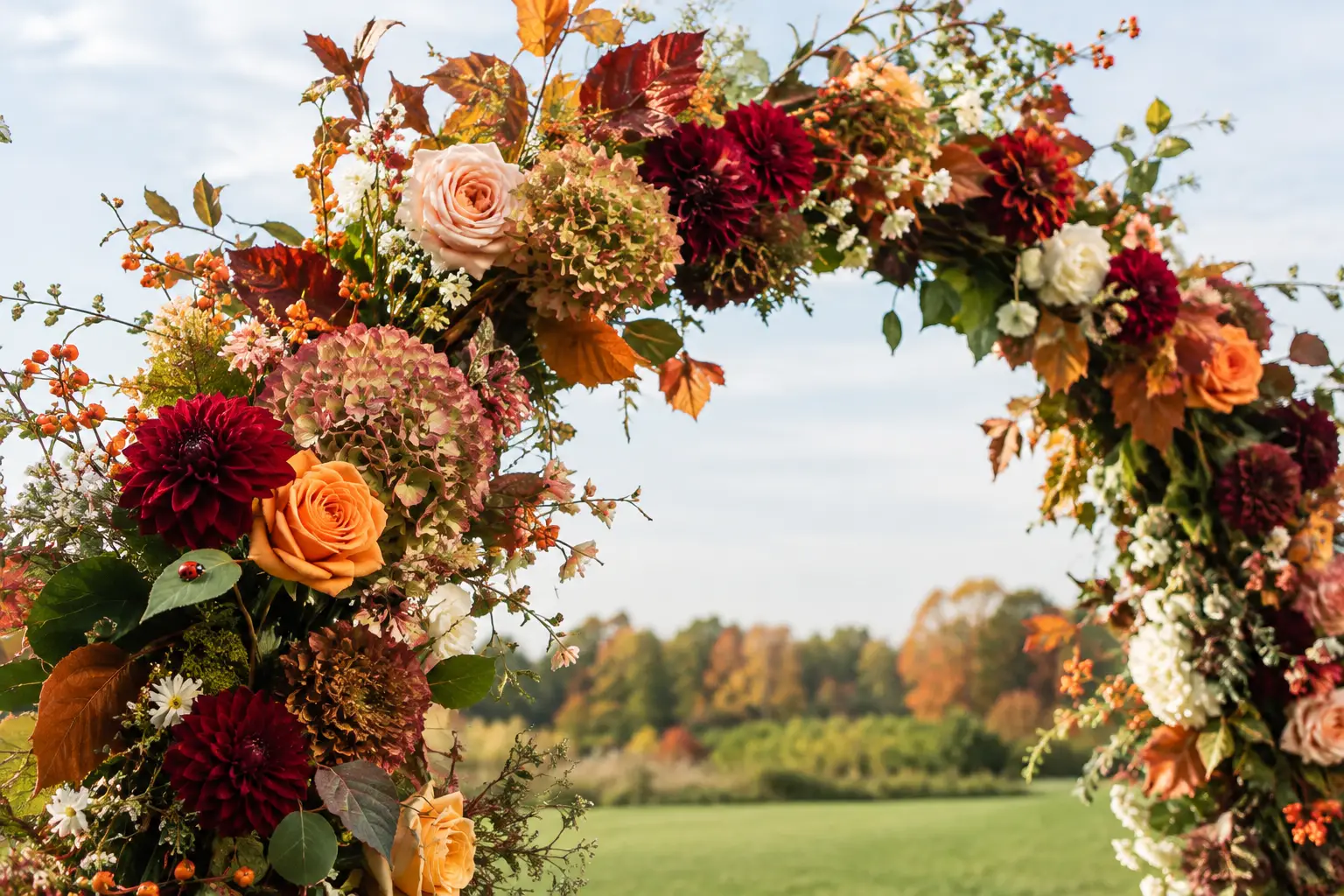
A floral arch does more than frame a ceremony. It gives a once-empty space a sense of arrival, drawing every eye toward the couple, the moment, and the promises being made. The most memorable floral arches do not look as if they were placed there simply for a photograph. They feel connected to the season, the setting, and the people standing beneath them.
For a wedding, shower, anniversary dinner, or meaningful celebration, an arch can become the visual thread that ties the whole event together. The key is choosing a design with intention rather than trying to fill every inch with flowers.
Start With the Moment You Want to Create
Before selecting blooms, consider how the space should feel when guests first see it. A garden ceremony may call for an airy, gathered-from-the-garden look with meadowy greenery and naturally placed blooms. A formal ballroom can support a fuller, more sculptural design with roses, orchids, hydrangea, or dramatic cascading foliage.
The structure matters, too. A classic rounded arch creates a romantic focal point, while an asymmetrical installation feels more modern and organic. Grounded floral meadows at the base can make a simple arch feel generous without covering the entire frame. For smaller celebrations, a floral accent on one upper corner paired with arrangements at the base may provide exactly the right amount of impact.
There is no single correct scale. A large arch can be breathtaking outdoors, but it may overwhelm an intimate venue or block a beautiful view. Sometimes the best choice is a partial design that lets the landscape, architecture, or meaningful backdrop remain part of the scene.
Choosing Flowers for an Arch That Lasts
An arch has practical needs as well as visual ones. Flowers are often installed hours before guests arrive, exposed to changing temperatures, sunlight, wind, and sometimes humidity. A skilled florist selects varieties not only for color and style but also for how they will perform throughout the day.
Roses are a favorite for their romance and range of colors, while spray roses add texture and smaller points of detail. Hydrangea can create generous volume, though it needs reliable hydration. Lisianthus, carnations, mums, and many varieties of greenery can offer beauty with strong endurance. For a refined statement, orchids add movement and elegance, especially when used in a cascading design.
Seasonality should guide the conversation. Spring can bring tulips, ranunculus, sweet pea, and flowering branches. Summer offers garden roses, delphinium, zinnias, and abundant greenery. Fall lends itself to rich dahlias, textural foliage, and warm autumn tones. Winter designs can feel wonderfully lush with evergreens, berries, amaryllis, and elegant white blooms.
If a particular flower is essential to you, share that early in the planning process. Some blooms are more delicate, more expensive, or difficult to source during certain months. A florist can often suggest a close alternative that preserves the look and emotion you love without compromising the design.
Color Is More Than a Palette
A floral arch should complement the day rather than compete with it. Start with the colors already present: bridesmaid dresses, linens, ceremony chairs, the venue walls, and the natural surroundings. Then decide whether you want the flowers to blend softly or provide contrast.
Soft neutrals, blush, cream, and gentle greenery create a timeless, romantic effect. A bolder palette of coral, raspberry, marigold, or jewel tones can bring warmth and personality, especially in a simpler venue. White flowers can look crisp and classic, but they benefit from textural variation so the design does not disappear in bright light or photographs.
It also helps to think about what will be worn beneath the arch. A white or ivory gown may stand out beautifully against deeper greens and colorful blooms. If the wedding party is wearing rich colors, a lighter floral palette can keep the ceremony setting balanced.
What Shapes the Cost of Floral Arches?
An arch is a custom installation, so pricing is influenced by more than the flowers themselves. The size of the frame, coverage level, flower varieties, labor, delivery, installation time, and removal all affect the investment. A design that appears loose and effortless often takes careful mechanics and experienced hands to achieve.
Full floral coverage naturally uses more product and labor than a partial design. Flowers with a high stem cost, such as premium garden roses or orchids, will also change the budget. Complex venues may require extra time for access, setup, safety considerations, or installing the arch in a location far from parking and water access.
A clear budget does not limit creativity. It helps your florist build the right design from the start. If an elaborate full arch is not the best fit, consider a partial arch with a lush base, freestanding floral pillars, or ceremony arrangements that can later be moved to the reception. Repurposing flowers can stretch the investment while keeping the day visually cohesive.
Details That Make the Design Feel Like Yours
The strongest event florals reflect the people being celebrated. That might mean including a favorite flower, echoing the colors of a family heirloom, or choosing a design that suits the couple’s actual style rather than a passing trend.
A few well-chosen details can make the arch feel deeply personal. Perhaps the ceremony takes place at sunset, calling for warm peach, apricot, and golden tones. Perhaps the couple loves the feeling of an English garden, with loose greenery and layered blooms. Or perhaps the venue is clean and contemporary, inviting an artful arrangement with negative space and sculptural branches.
Texture is often what brings an arch to life in person and in photographs. Combining larger focal flowers with smaller blooms, buds, vines, and greenery creates depth. A design with only one flower type can be beautiful, but it tends to feel more formal and graphic. Mixed textures feel softer, more dimensional, and more natural.
Do Not Forget the View From Every Angle
Guests may see the arch from the front, sides, and back. The photographer may capture it from a distance, close up, and over the shoulders of the couple. Ask how the design will be finished on the back side, particularly if guests will be seated behind or beside it.
Placement is equally important. Direct sun can be difficult on delicate flowers and hard on photographs. Windy outdoor locations may require a sturdier frame and more secure mechanics. At an indoor venue, ceiling height, aisle width, and fire or safety policies can shape what is possible. These details are not meant to take away from the beauty. They are what allow the beauty to hold up when the day is underway.
Planning Floral Arches With Confidence
Bring inspiration photos to your consultation, but use them as a starting point rather than a strict blueprint. Photos rarely show the venue conditions, season, flower availability, or budget behind a design. The most helpful images reveal what you are drawn to: abundant greenery, delicate color, a dramatic cascade, an asymmetrical shape, or an airy garden feeling.
Share your venue, event date, ceremony time, color ideas, approximate guest count, and the elements you would like coordinated with the arch. Personal flowers, aisle arrangements, reception centerpieces, welcome-table flowers, and cake blooms can all carry a related palette without looking identical.
At RoseAmongThorns, thoughtful guidance is part of the design process. A floral arch should feel exciting to plan, not like another item on an already crowded event checklist. With the right scale, sturdy mechanics, seasonal flowers, and a design rooted in your story, it becomes more than a backdrop.
When you picture the moment you step beneath the flowers, trust that feeling. The best arch is not the fullest or the most elaborate one. It is the one that makes the setting feel unmistakably yours.