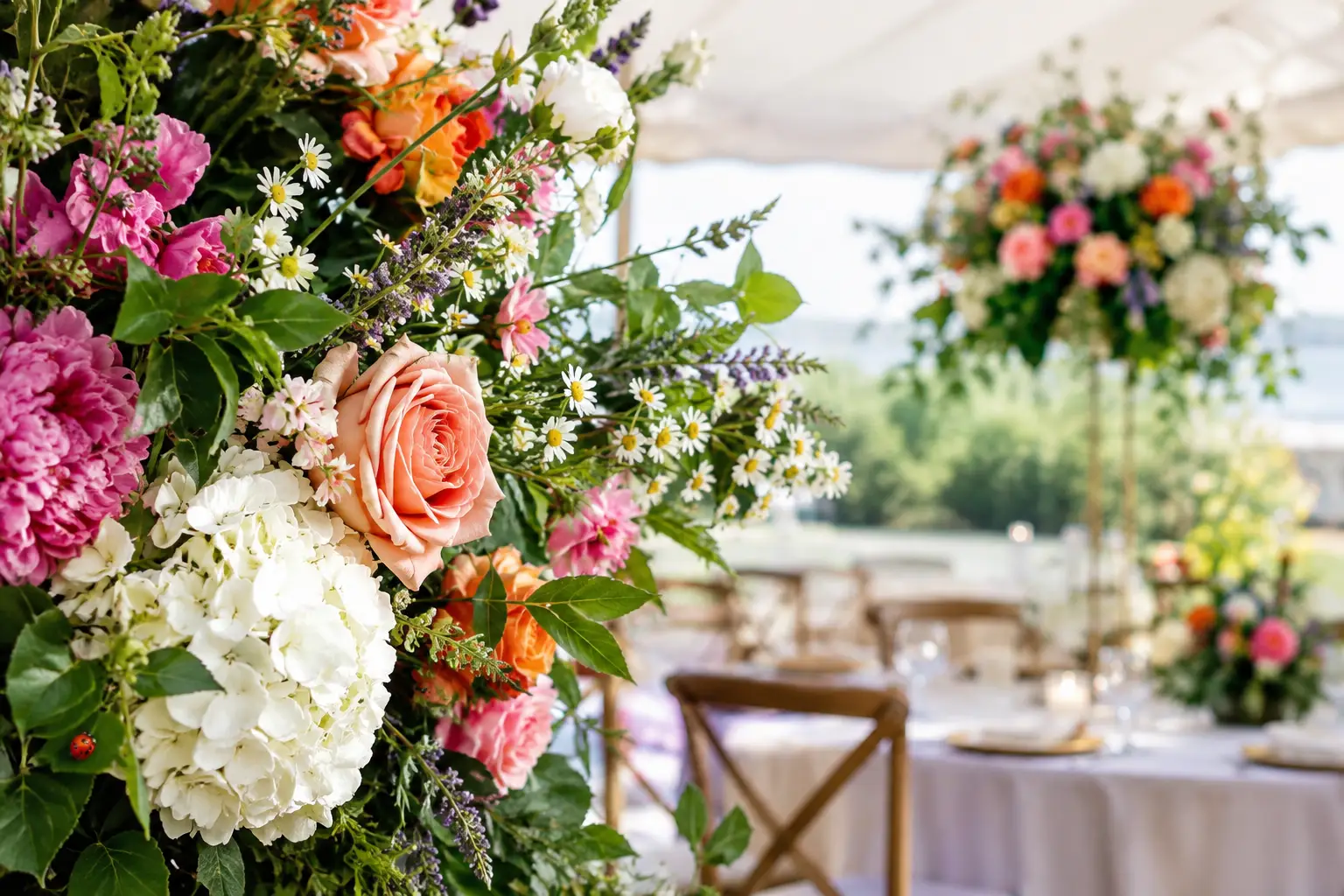
A ceremony space can be perfectly lovely, then a suspended garden of blooms changes the way everyone feels when they walk in. That is the power of floral installations: they do more than decorate a room. They create a sense of arrival, frame the moments people photograph, and make a celebration feel deeply personal.
For weddings, showers, milestone birthdays, corporate gatherings, and meaningful community events, installation work turns flowers into part of the setting itself. It may be a flower-covered arch at the altar, a meadow growing up the aisle, a cloud of blooms over the dinner table, or a living wall that gives guests a beautiful place to gather. The right design feels effortless, but thoughtful planning is what makes that feeling possible.
What Makes a Floral Installation Different?
A standard arrangement is designed to be admired from a table, a pedestal, or across a room. An installation is designed around the room. It responds to its architecture, traffic flow, lighting, ceiling height, and the way guests will move through the event.
That difference matters. A low centerpiece adds warmth to a dinner table, while a suspended floral feature can make the entire dining room feel intimate and celebratory. An arch can define a ceremony backdrop, but it can also become a focal point for portraits after the vows. Many installations are created with more than one moment in mind, helping a design carry its beauty throughout the day.
The most successful work balances visual impact with practical details. Guests need clear sightlines. Walkways need to remain comfortable and safe. Flowers must be conditioned correctly and installed securely. When a design is built with these considerations from the beginning, it looks natural in its environment rather than simply placed there.
Floral Installations Begin With the Feeling
Before choosing flowers, begin with the atmosphere you want guests to experience. A romantic garden wedding may call for soft roses, airy delphinium, flowering branches, and trailing greenery. A modern celebration may feel more at home with sculptural orchids, tropical leaves, anthurium, or a tighter palette of one or two colors.
Color is only one part of the story. Texture often gives an installation its depth. Delicate blooms can soften a brick wall or wood-beam ceiling. Larger flowers create visual rhythm from a distance. Greenery can bring movement and fullness, especially when it trails or climbs. The mix should suit the venue, the season, and the personality of the people being celebrated.
For a more sentimental event, flowers can also carry meaning. A favorite bloom, a family garden color palette, or flowers that recall a loved one can be woven into the design without making the overall look feel overly formal. Those personal details are often what guests remember most.
Ceremony Arches and Grounded Meadows
Ceremony florals should draw attention toward the couple without blocking the people who matter most. An asymmetrical arch offers an artistic, gathered look, while a full arch makes a grand statement around the vows. Grounded meadow arrangements are a beautiful alternative for couples who want abundant flowers without a structure overhead.
Grounded designs work especially well for indoor ceremonies, outdoor settings with wind concerns, or spaces where attaching anything to walls is not allowed. They can be arranged in a way that looks as though flowers are growing naturally around the ceremony space. Afterward, portions may be moved to the reception, depending on the construction and the event timeline.
Suspended Flowers and Overhead Designs
There is a special kind of magic in looking up and seeing flowers overhead. Hanging installations make use of vertical space that might otherwise go unnoticed, especially in ballrooms, tents, and venues with high ceilings. They can be lush and garden-like, minimal and modern, or built around greenery with floral accents.
Overhead work does require added planning. The venue may have rules about rigging, ceiling access, ladders, load limits, or approved installation times. This is a place where early conversations matter. A florist can create an equally beautiful direction within those parameters, whether that means a full suspended piece, a design supported from a freestanding structure, or a series of smaller features.
How to Plan Floral Installations Well
A strong floral plan starts with a venue walkthrough or clear photos, measurements, and an honest discussion of priorities. The florist needs to understand where the installation will live, how long it needs to look its best, and whether it will be viewed close up, from across the room, or both.
It is helpful to share inspiration, but it is equally helpful to explain what you love about each image. Maybe it is the draping greenery, the warm peach palette, the scale, or the loose garden movement. A custom design does not need to copy a photograph to capture the feeling that made you save it.
Budget is part of the creative conversation, not an afterthought. Installation pricing reflects more than stems. It includes mechanics, structure, preparation, design labor, transport, on-site setup, and often removal at the end of the event. Flowers with a large visual presence can be used strategically, then layered with seasonal blooms and foliage to create fullness where it will have the greatest effect.
If one statement piece is the priority, it may make sense to keep other floral moments simpler. For example, investing in a ceremony installation and using bud vases or refined greenery at reception tables can create a cohesive look without asking every part of the floral budget to do the same job. There is no single right approach. The best choice depends on the venue, guest count, schedule, and the moments you most want to highlight.
Choosing Flowers for Beauty and Endurance
Not every flower performs the same way in every setting. Outdoor heat, direct sun, wind, and long event days can affect delicate varieties. Some flowers are better suited to a cool indoor space, while others hold up beautifully in summer weather or beneath event lighting.
Seasonality can be an advantage rather than a limitation. Flowers at their natural peak often offer better color, freshness, and value. A skilled florist can suggest alternatives when a specific bloom is unavailable or not ideal for the conditions. The goal is not to settle for less. It is to choose flowers that will look their best when the celebration is happening.
Fresh flowers are only part of the material palette. Branches, foliage, potted plants, moss, fruit, candles, fabric, and thoughtfully chosen vessels can add dimension. The key is restraint. Each element should support the overall design rather than compete for attention.
The Details Guests May Never See
Beautiful installations require a great deal of quiet work behind the scenes. Structures must be stable, blooms need a water source when appropriate, and every element has to be placed with care. At RoseAmongThorns, custom event work is approached with both artistry and respect for the occasion, because a floral moment should feel joyful to experience, not stressful to manage.
Timing is also essential. Some pieces are built in advance, while others are finished on site so they look fresh at the moment guests arrive. A clear event schedule allows the floral team to coordinate delivery, setup, photography, ceremony timing, and breakdown with minimal disruption.
If an installation will be reused from ceremony to reception, that plan should be made early. Designs can be created in sections that move well, but not every piece is meant to travel after it is installed. Being realistic about those mechanics protects both the flowers and the flow of the event.
Let the Space Tell Part of the Story
The most memorable floral installations do not need to fill every available corner. Sometimes a single arch, a flower-lined entry, or an overhead moment above the head table says more than dozens of smaller arrangements. The design should give guests something to feel when they enter, then leave enough room for the people, conversation, and celebration at the heart of the day.
Start with the moment you want to transform, and let the flowers do what they do best: make it feel like it could belong to no one else.