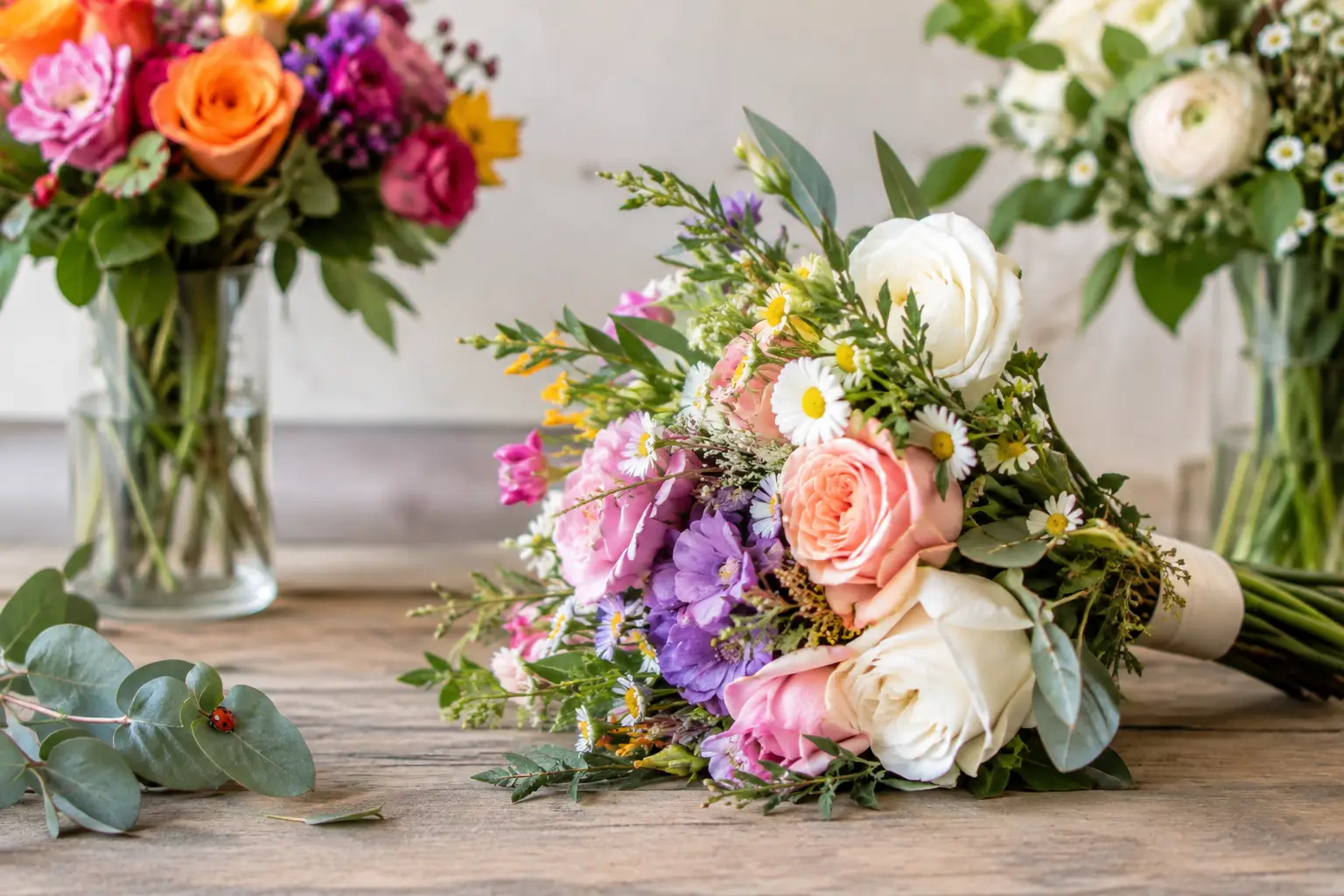
A bridal bouquet may look effortless in photos, but it represents far more than a handful of pretty stems. If you have been asking, why are wedding flowers expensive, the honest answer is that wedding florals combine perishable products, skilled design, careful logistics, and a great deal of behind-the-scenes preparation – all for one meaningful day.
At RoseAmongThorns, we believe a wedding flower budget should feel understandable, not mysterious. Every celebration is different, and thoughtful choices can help you put your investment where it will matter most to you.
Why Are Wedding Flowers Expensive?
Wedding flowers are custom-made, time-sensitive, and designed to hold up through a long day of celebrating. Unlike a grab-and-go bouquet, each piece must be planned around your colors, venue, wedding party, season, photography timeline, and personal style.
Flowers themselves are only one part of the cost. A florist also sources the blooms, conditions them so they are hydrated and beautiful, creates each arrangement by hand, transports the designs safely, and often delivers and installs them on site. For larger weddings, that work can begin days before the ceremony and continue until shortly before guests arrive.
The result is not simply decor. It is an atmosphere that frames your walk down the aisle, welcomes loved ones to dinner, and appears in the photographs you will revisit for years.
Fresh Flowers Have a Short, Delicate Window
Wedding flowers are living materials. They arrive from farms, wholesalers, and growers in varying stages of openness, then need expert care before they can be used. Stems are unpacked, trimmed, cleaned, hydrated, and stored at the right temperature. Some varieties need a day or two to open properly; others are delicate enough that they need to be handled with extra care from the moment they arrive.
A florist must order enough flowers to account for natural variation. A particular bloom may arrive too open, too closed, bruised from travel, or not quite right for the design. Having backup stems protects the final look, but it also means the purchase is based on what is needed to produce a polished result, not merely the exact number of blooms visible at the venue.
Seasonality makes a real difference, too. Peonies, ranunculus, garden roses, orchids, anemones, and lilies can all vary in price based on the time of year, growing conditions, and availability. A flower that is abundant one month may be limited or imported the next. If a favorite bloom is out of season, sourcing it can cost more and carry a little more uncertainty.
The Design Work Is Highly Personal
Wedding flowers are not assembled from a standard recipe. Even when couples share inspiration photos, the florist interprets the overall feeling, palette, flower priorities, vessel style, table layout, and scale of the space. A loose garden-style centerpiece, for example, takes different mechanics and design time than a compact centerpiece in a low vase.
There is also a wide range of pieces to coordinate. A typical wedding may include a bridal bouquet, bridesmaid bouquets, boutonnieres, corsages, ceremony arrangements, aisle flowers, reception centerpieces, sweetheart-table flowers, cake flowers, and welcome-table designs. Every item must feel connected while still serving a distinct purpose.
The labor behind a bridal bouquet is especially easy to overlook. Stems are selected one by one for color, freshness, and shape. The bouquet is built to look beautiful from every angle, balanced for the person carrying it, securely wrapped, and kept hydrated until it is time to go. Boutonnieres may be small, but they require detailed wiring, taping, and secure finishing so they remain neat through hugs, photos, and hours of wear.
Mechanics, Supplies, and Rentals Add Up
Fresh blooms need a structure that helps them stay secure and hydrated. Depending on the design, a florist may use vases, floral foam alternatives, water tubes, chicken wire, flower frogs, containers, ribbon, pins, tape, floral wire, and protective packaging. Ceremony installations and hanging designs can require additional mechanics, ladders, tools, and careful safety planning.
Some couples prefer the fuller look created by many small bud vases, while others choose a few larger statement arrangements. Neither approach is automatically less expensive. A room full of bud vases can require substantial flower processing, many individual vessels, and significant setup time. Large focal arrangements may use fewer containers but need premium blooms, specialized mechanics, and a more complex delivery plan.
If your floral plan includes rented candles, arches, pedestals, or vessels, those items also need to be prepared, transported, collected afterward, cleaned, and returned to inventory. The price reflects the handling required, not just the item sitting on a table.
Delivery and Setup Protect the Finished Design
Wedding flowers cannot simply be boxed up like a standard package. Centerpieces need to remain upright, bouquets need water and protection, and delicate blooms cannot be exposed to extreme temperatures in a parked vehicle. A trained delivery team loads arrangements carefully, follows the venue schedule, and brings the right tools for setup.
At the venue, floral professionals may place centerpieces, attach ceremony flowers, arrange petals, secure aisle pieces, and make last-minute adjustments after seeing the room. If the ceremony and reception are in different places, or if designs need to be repurposed between events, the timeline becomes even more involved.
This service is valuable because wedding days have very little room for do-overs. A dependable florist plans for traffic, weather, access instructions, loading restrictions, and the fact that a venue may be busy with several vendors at once. For Springfield-area couples, working with a local floral team also means having people who understand how to get your flowers where they need to be, on time and in beautiful condition.
How to Spend Your Floral Budget Thoughtfully
The best way to manage floral costs is not to remove every special detail. It is to choose the moments that matter most. For some couples, that is an abundant bridal bouquet and a ceremony backdrop. For others, it is memorable reception tables where guests will spend the evening. Your florist can help identify where flowers will have the greatest visual and emotional impact.
Start by sharing your overall budget early, along with your guest count, venue, wedding date, and a few images that show the feeling you love. Be clear about your non-negotiables, whether that is a particular flower, a statement installation, lush centerpieces, or personal flowers for a large wedding party. Honest budget conversations make it easier to create a design that feels intentional rather than scaled back.
Flexibility with specific flower varieties is often helpful. If you love soft, romantic texture, your florist may achieve that feeling with seasonal blooms rather than relying on one imported, high-demand flower. Choosing flowers that are naturally available around your wedding date can preserve the style you want while making the budget work harder.
Guest count and table count matter as much as the size of the arrangements. A simple design repeated across 25 tables can become a significant portion of the floral budget because it requires more blooms, vessels, prep work, delivery space, and setup time. If you want a fuller focal point, consider concentrating flowers on the head table, bar, welcome table, ceremony, or a smaller number of guest tables.
Beautiful Does Not Have to Mean Maximal
Wedding flowers can be elegant at many price points. A smaller wedding may allow for a few lush, highly personal pieces. A larger celebration may benefit from an edited palette, greenery, candles, or a mix of statement arrangements and simpler complementary designs. The goal is cohesion, not filling every available surface with flowers.
Ask to see options, but keep the conversation centered on priorities rather than a strict per-stem calculation. Floral design is a creative service, and the right solution often comes from understanding the full picture: the room, the season, the guest experience, and the memories you want your flowers to hold.
Your wedding flowers are temporary by nature, yet their role is lasting. Choose the details that make you feel most like yourselves, trust the process behind the petals, and let your florist create beauty that feels right for your day.