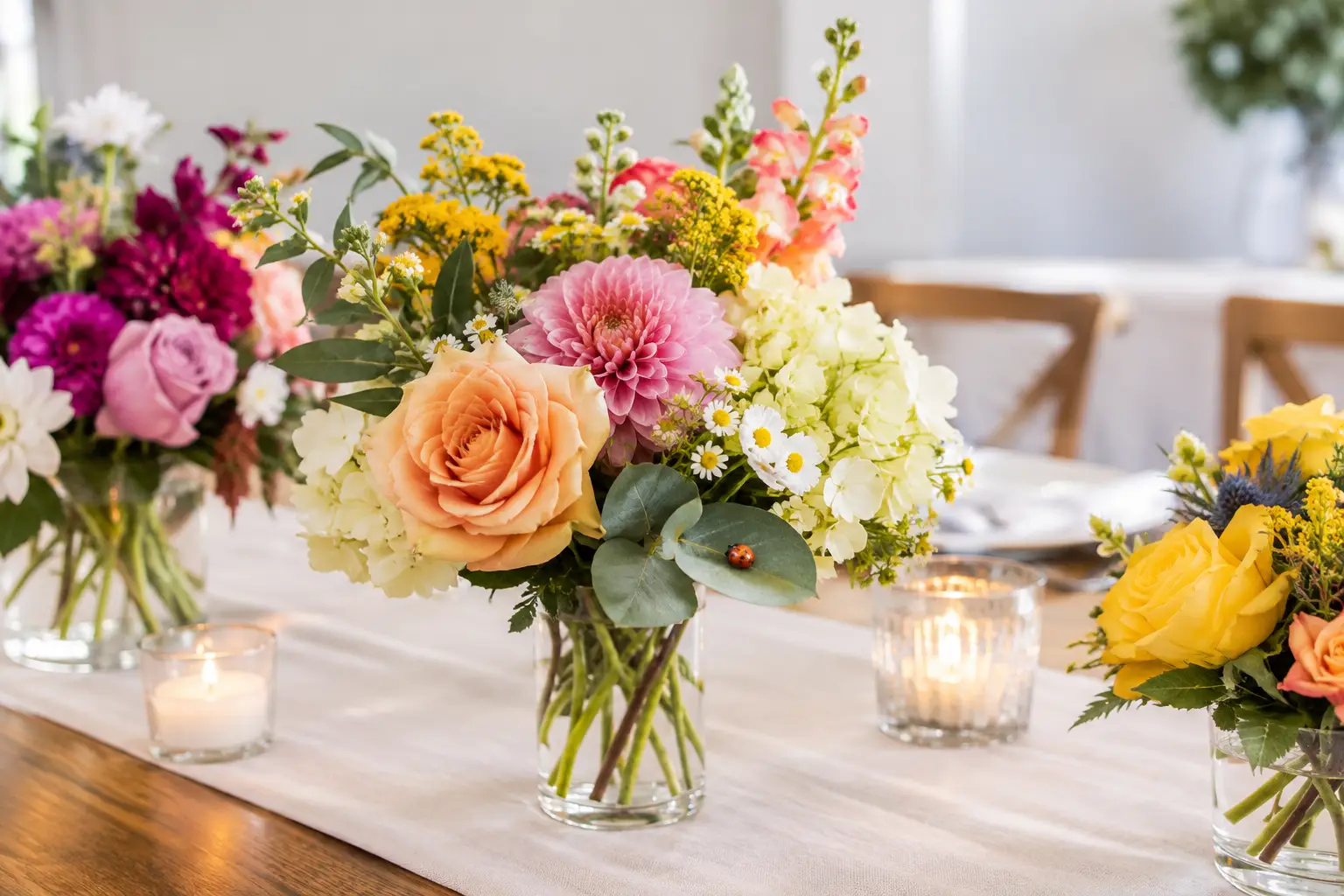
A reception table does more than hold place settings and glasses. It sets the pace for the whole celebration: intimate or lively, polished or garden-like, formal or comfortably personal. This guide to reception table flowers will help you make choices that photograph beautifully, support conversation, and feel true to the occasion rather than simply filling space.
Start With How Guests Will Use the Table
Before choosing a flower variety, consider the experience around the table. Guests need room for plates, shared dishes, candles, menus, and hands. They also need to see one another. A dramatic arrangement can be stunning at the venue walkthrough, but if it blocks a guest’s view halfway through dinner, it has missed part of its purpose.
The most reliable centerpiece shapes are low and lush, or tall and airy. Low designs keep blooms beneath eye level and create a welcoming, gathered feeling. Taller pieces work when the flowers and greenery begin high enough above the table that sightlines remain clear. The middle height is often the trickiest because it can sit directly in a guest’s line of vision.
Think about the table itself, too. Long farm tables often look best with several connected moments – small compotes, bud vases, candle clusters, or a loose greenery treatment – rather than one oversized centerpiece. Round tables usually call for a central focal point with a clean, balanced silhouette. For cocktail tables, restraint is a kindness. A compact arrangement and a candle can make the table feel finished without crowding it.
Choose Reception Table Flowers for the Room
A lovely centerpiece should belong to its setting. The same blush garden roses can read romantic in a historic ballroom, relaxed in a winery, or almost coastal when paired with airy foliage and pale blue accents. Your venue’s color, lighting, table linens, and architecture should guide the design.
Look first at what cannot be changed. Warm wood, brick, velvet drapery, patterned carpet, or dramatic ceiling fixtures are already part of the visual story. In a richly detailed room, a more edited palette can give the eye a place to rest. In a bright, minimal venue, flowers can provide softness, texture, and color.
For daytime receptions, fresh whites, soft pastels, citrus tones, and garden-inspired greens tend to feel natural in daylight. Evening events can carry deeper shades such as burgundy, plum, rust, chocolate, or saturated jewel tones, especially when paired with candlelight. That said, there are no rules requiring a fall wedding to use orange or a spring event to use pink. The strongest choices reflect the couple, host, or purpose of the gathering.
Let the Palette Breathe
You do not need every wedding color in every centerpiece. Often, reception flowers are more elegant when they repeat two or three key tones from the broader palette and rely on foliage, neutral blooms, or vessels for contrast. If attendants wear blue and the stationery includes warm gold, for example, reception tables might use soft cream flowers with small blue accents and warm brass-toned candleholders.
Texture makes a restrained palette feel full. Roses, ranunculus, lisianthus, stock, hydrangea, carnations, orchids, and seasonal flowering branches all offer different movement and personality. A professional florist can build depth through flower form instead of adding more colors than the room needs.
Scale Matters More Than Flower Count
Large tables and high ceilings can make undersized centerpieces disappear. Smaller rooms can feel crowded when every table receives a towering arrangement. This is why an early conversation about guest count, table dimensions, and room layout is more useful than choosing flowers from a photograph alone.
A mixed centerpiece plan is often the best use of the floral budget. Instead of placing identical large arrangements on every table, you might alternate elevated designs with low compotes and candle groupings. The room still feels intentional, but the variation creates rhythm and allows investment in the tables guests will notice most, such as the head table, sweetheart table, cake table, welcome table, and bar.
Vessels deserve the same attention as flowers. Clear glass feels light and versatile. Ceramic compotes bring a garden-inspired, collected look. Metallic vessels can add formality or warmth. A vessel should support the design without becoming so tall or wide that it steals valuable table space.
Plan for Scent, Safety, and Supper
Fragrance is part of the memory of an event, but too much scent at the dinner table can compete with the meal or bother sensitive guests. Fragrant garden roses, stock, and sweet peas are beautiful in moderation. Strongly scented blooms are often better reserved for an entry arrangement, ceremony installation, or restroom flowers than repeated across every dining table.
Avoid centerpieces with loose pollen near food, especially heavily pollen-bearing lilies. Also consider the flame policy at your venue before planning taper candles or votives. Flameless candles can still give a warm glow and may be the practical choice in spaces with strict safety requirements, outdoor breezes, or children at the celebration.
If the reception is outdoors, ask about wind, heat, direct sun, and insects. Delicate blooms may need sturdier companions, weighted vessels, and placement away from harsh afternoon light. For a tented event, the floral plan should account for when the tent is installed, how tables will be arranged, and whether the space will be climate controlled.
Work With the Season, Not Against It
Seasonal availability affects both the look and the value of reception flowers. Choosing blooms that are naturally abundant around your event date can make a design feel especially fresh and can leave more room in the budget for thoughtful details such as candles, bud vases, or a statement installation.
Seasonality is not a limitation. It is a design advantage. Spring brings delicate movement and new-growth textures. Summer offers abundant color and fuller garden flowers. Autumn has rich tones, branches, berries, and texture. Winter invites evergreens, amaryllis, hellebores, orchids, and layered neutrals. Specific flowers can often be sourced outside their traditional season, but that may change cost, quality, or availability.
Share your must-have flowers with your florist, then leave room for an artful seasonal substitution. The goal is not to duplicate a social media image bloom for bloom. It is to create a design with the same feeling while using the freshest, most beautiful materials available.
Set a Floral Budget With Priorities in Mind
Reception flowers are one part of the event, and the budget should reflect what matters most to you. If table florals are the visual heart of your reception, invest there and simplify elsewhere. If you care most about a ceremony backdrop or a dramatic head table, use smaller companion pieces for guest tables.
When discussing budget, be clear about your guest count, table types, color preferences, repurposing plans, and any nonnegotiables. A skilled florist can show where a change in vessel, flower mix, or centerpiece count will make the biggest difference. RoseAmongThorns can also help Springfield-area hosts balance custom artistry with the practical details that make an event run smoothly.
Do not forget delivery, setup, transfers, and teardown when comparing floral plans. These services can be particularly valuable for installations, rented vessels, candles, or events with a tight venue timeline. The calm of having each centerpiece placed correctly before guests arrive is part of the value.
Add Meaning Without Adding Clutter
The most memorable reception tables often include one personal layer. It might be a flower that reminds you of a grandmother’s garden, a small framed table number, a handwritten note, a meaningful color, or vessels collected for a family celebration. Choose one or two details and let them shine.
Too many competing elements can make even beautiful flowers feel busy. If the linens are patterned, keep the centerpiece silhouette clean. If the flowers are abundant and textural, use simpler menus and place settings. A reception table should feel generous, not overloaded.
Your flowers do not have to impress from every angle in a styled photograph. They should welcome guests, make room for connection, and carry the feeling of the day through dinner and conversation. When the design does that, the table becomes more than décor. It becomes part of the memory guests take home.