A bouquet can say exactly what you mean, but the flowers you picture may not always be growing at that moment. This guide to seasonal flower availability helps take the guesswork out of choosing blooms that feel fresh, fitting, and thoughtfully designed for the occasion. Whether you are sending a birthday surprise across Springfield, planning a wedding, or choosing sympathy flowers for a family you love, seasonality shapes what is possible and what will look its very best.
Fresh flowers follow nature’s rhythm, even when modern floral markets make many varieties available far beyond their local growing season. A skilled florist can create something beautiful all year, but knowing what is naturally abundant can help you make choices with more confidence, flexibility, and personality.
A Guide to Seasonal Flower Availability by Season
Spring: soft color and fresh beginnings
Spring is a favorite season for flower lovers because it brings a generous mix of delicate textures, cheerful colors, and garden-inspired shapes. Tulips, daffodils, hyacinths, ranunculus, anemones, sweet peas, and lily of the valley are closely associated with this time of year. Peonies also begin making their much-anticipated appearance in late spring, although their exact timing and availability can vary from year to year.
These blooms are especially lovely for Easter, Mother’s Day, new baby gifts, anniversaries, and spring weddings. Tulips offer a clean, happy look for everyday gifting, while ranunculus and anemones bring a more detailed, artistic feel to a centerpiece or bridal bouquet. Fragrant hyacinths can be memorable, but fragrance is worth considering if the recipient is sensitive to scent or if flowers will be placed in a hospital setting.
Spring flowers can be weather-sensitive. A late cold snap or a particularly warm season may shorten a crop or change the timing of specialty blooms. If you have your heart set on peonies for a May celebration, ordering early and having a backup flower in mind is a wise approach.
Summer: color, garden texture, and celebration
Summer flowers tend to be expressive, abundant, and full of movement. Sunflowers, zinnias, dahlias, snapdragons, lisianthus, delphinium, and hydrangea often shine during the warmer months. Roses are available throughout the year, but summer’s broader palette makes them especially easy to pair with bright seasonal companions.
For birthdays, backyard gatherings, get-well wishes, and summer weddings, this is the season to embrace color. Sunflowers feel warm and optimistic. Zinnias add a playful, garden-picked character. Dahlias make a striking focal flower for arrangements that need a little drama, from richly colored centerpieces to romantic late-summer bouquets.
Hydrangea deserves a small note of caution. Its full, cloudlike blooms create beautiful volume, but it can be thirsty and is happiest when properly conditioned and kept away from intense heat. A florist can advise when hydrangea is the right choice for a particular event design or delivery situation.
Fall: rich tones and lasting warmth
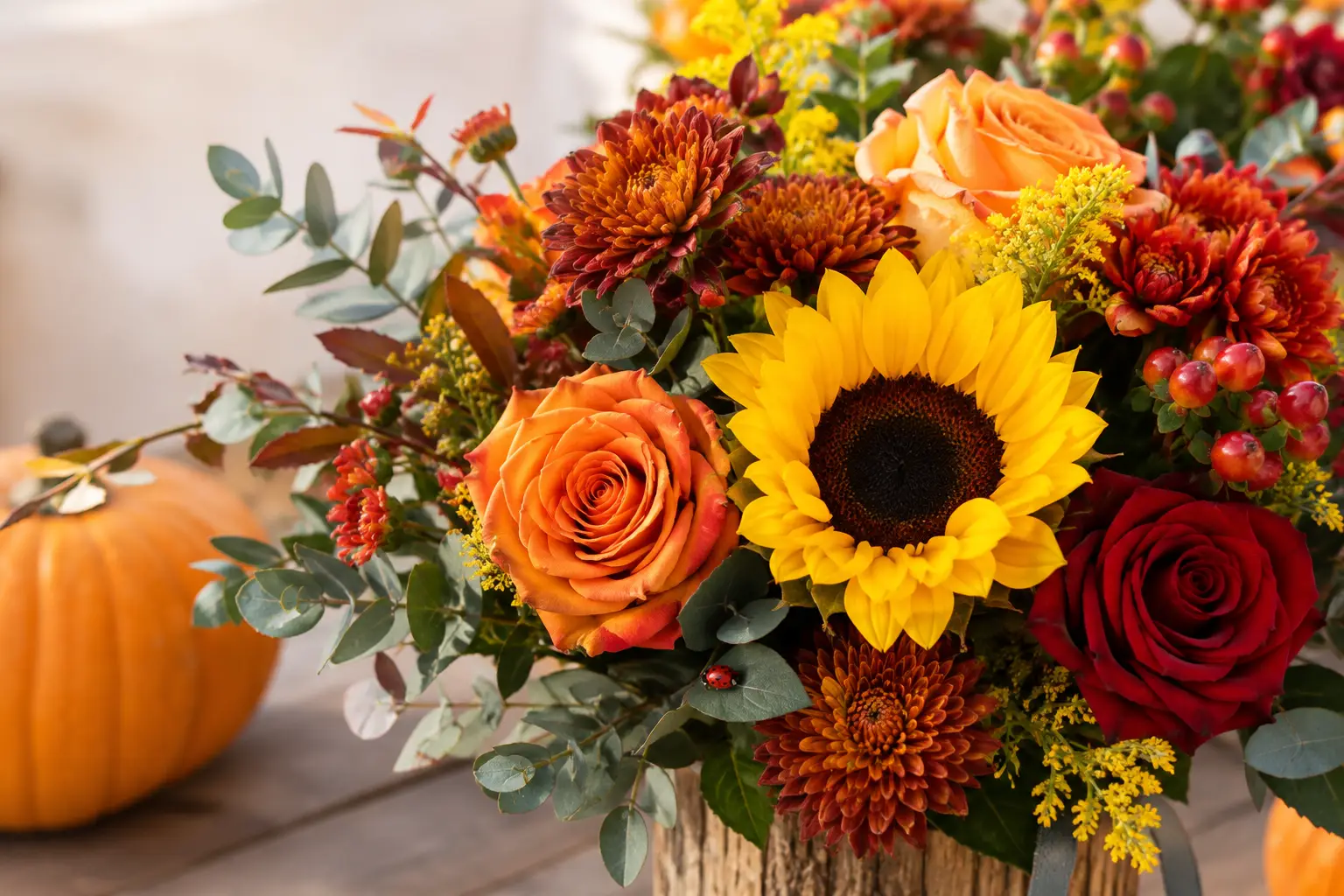
Autumn flowers bring depth to the table. Dahlias may continue into early fall, joined by chrysanthemums, asters, celosia, marigolds, solidago, and textural elements such as branches, berries, and ornamental grasses. The palette often shifts toward amber, burgundy, rust, plum, gold, and warm cream.
Fall arrangements work beautifully for hostess gifts, birthdays, thank-you flowers, sympathy designs, and seasonal gatherings. Chrysanthemums are particularly versatile, available in many forms from button-like pompons to larger, more open blooms. They offer excellent color range and can help create a full, polished arrangement without making it feel overly formal.
For weddings, fall does not have to mean orange. Soft neutrals, muted mauve, caramel, blush, and deep wine tones can feel seasonal while still reflecting a couple’s personal style. The best designs use the season as inspiration rather than a rulebook.
Winter: elegant staples and holiday character
Winter may seem quiet in the garden, yet it offers some of the year’s most meaningful floral moments. Amaryllis, paperwhites, hellebores, tulips, ranunculus, stock, roses, carnations, and evergreen accents all play a role in winter arrangements. Holiday designs may include pine, cedar, fir, magnolia leaves, berries, and pinecones for fragrance and texture.
Red roses remain a classic choice for romantic occasions, especially around Valentine’s Day, while winter whites and greens create a graceful look for sympathy flowers, celebrations of life, and seasonal home décor. Amaryllis makes a dramatic statement, but its large blooms are not always ideal for every container or delivery style. For a more compact arrangement, roses, tulips, or fragrant stock may be the better fit.
Winter weather can affect transportation and delivery schedules. When sending flowers during a busy holiday week or before Valentine’s Day, a little advance planning gives your florist more room to source preferred flowers and deliver with care.
What Is Available All Year, and What Changes?
One of the most helpful things to know is that “seasonal” does not always mean “available only once a year.” Many popular flowers are cultivated in greenhouses or sourced from different growing regions, making them available for much of the year. Roses, carnations, alstroemeria, lilies, chrysanthemums, gerbera daisies, orchids, and many types of greenery are often dependable options across seasons.
That said, year-round availability is not the same as identical availability. A particular rose color, orchid variety, or shade of hydrangea may be limited at certain times. Prices can also shift around major floral holidays and when weather or crop conditions affect supply. This is why a color palette and overall feeling are often more useful than requesting a long list of exact stems.
For example, asking for a soft, romantic bouquet in blush, cream, and pale blue gives a designer room to choose the freshest beautiful flowers available. Requesting a specific rare bloom in an exact shade for a date months away may require more flexibility. Both approaches can work, but they call for different expectations.
Choosing Flowers for an Important Date
For everyday gifts, let the season lead. A bright spring mix, a summer sunflower design, or an autumnal arrangement can feel personal because it reflects the moment it arrives. If you know the recipient has a favorite flower, share that detail. A florist can often feature it when available or suggest a thoughtful alternative with a similar shape, color, or mood.
For weddings and larger events, start floral conversations early, particularly when your vision depends on peonies, dahlias, sweet peas, anemones, or another seasonal favorite. Bringing inspiration photos is helpful, but focus on the elements you truly love: the colors, airiness, texture, or level of formality. A custom design is strongest when it honors that vision while allowing room for the best market flowers.
For sympathy flowers, seasonality can gently guide the design without becoming the focus. White lilies, roses, carnations, hydrangea, and orchids are enduring choices, while seasonal accents can add warmth and individuality. If the person being honored loved gardening, sunflowers, wildflower textures, or a particular color, sharing that memory can help shape a tribute that feels sincere.
How to Get the Best Seasonal Flowers
Ordering ahead is helpful for holidays, events, and designs with specific requests. For a standard delivery, a florist can often create something lovely with fresh, in-stock flowers. For a special variety, a large arrangement, or an event, more notice improves the chances of sourcing the right materials.
It also helps to be open to substitutions when they protect the quality of the finished piece. Thoughtful substitutions are not shortcuts. They are often the difference between using a flower that has traveled too far or choosing a fresher bloom that will open beautifully and last longer. At RoseAmongThorns, that design judgment is part of creating flowers that feel made for the person receiving them, not pulled from a formula.
When in doubt, share the occasion, your budget, the recipient’s preferences, and the feeling you hope to send. The season will supply the color and character, while a caring florist can turn those details into a bouquet that feels right when it matters most.