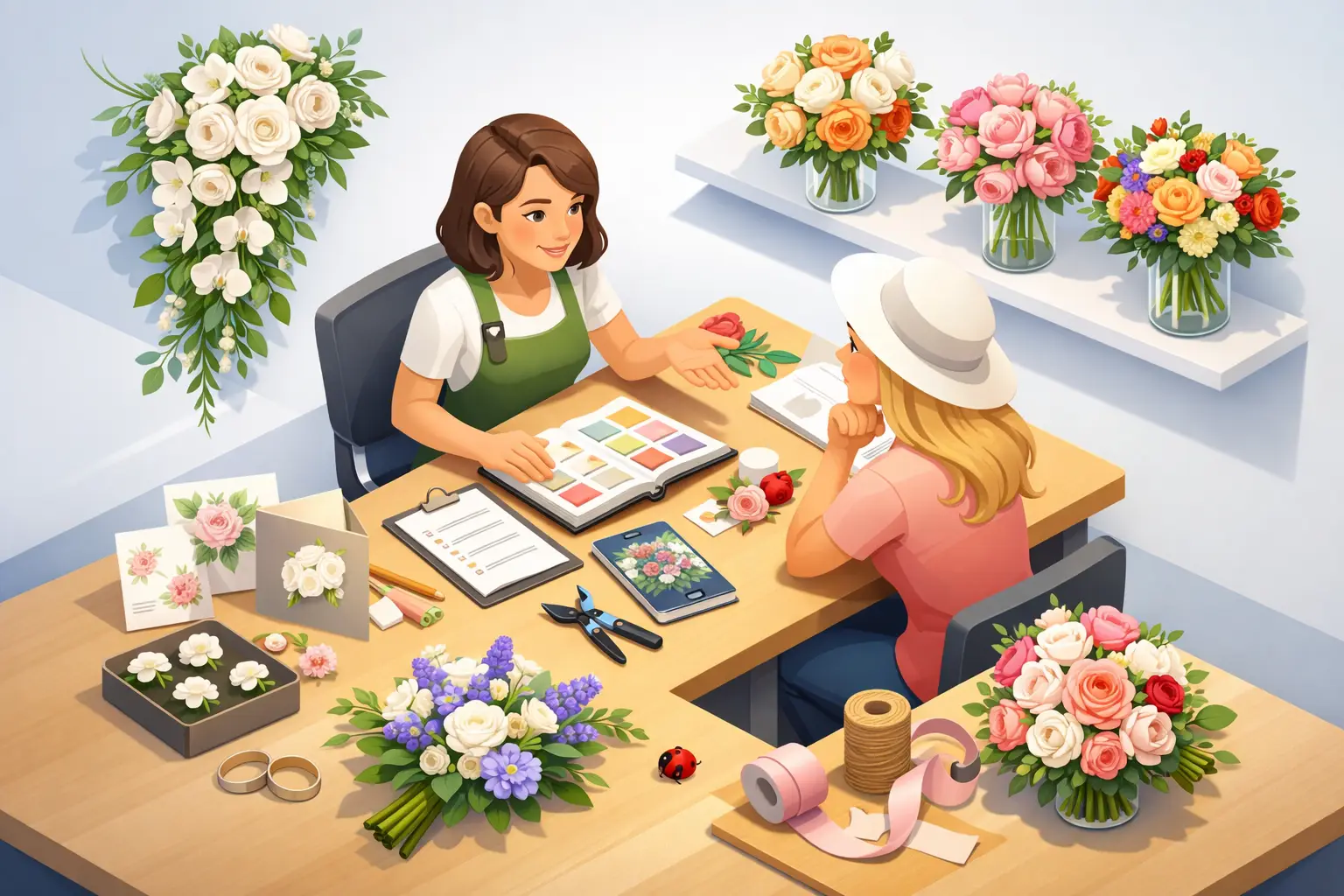
A wedding bouquet may be held for only a few hours, but the flowers shape nearly every visual memory of the day: the walk down the aisle, the ceremony backdrop, the reception tables, and the photos you will keep forever. The right questions to ask a wedding florist help turn inspiration into a realistic, beautiful plan – one that suits your venue, priorities, and budget without adding stress to your planning list.
A thoughtful florist should welcome your questions. Wedding flowers involve living, seasonal materials, venue logistics, and many small personal details. Clear conversation early on gives your designer the information needed to create arrangements that feel like you.
Begin With Your Vision and Priorities
Bring inspiration photos if you have them, but do not worry if you cannot name every flower in the image. A skilled florist can look beyond a photo and identify the qualities you are drawn to: loose and garden-inspired, clean and modern, colorful and celebratory, romantic and softly textured, or classic and formal.
“How would you describe our floral style?”
This question tells you whether the florist understands the feeling behind your inspiration. You may love the airy movement of a bouquet, the contrast of deep colors, or the lushness of layered greenery more than one particular bloom. A designer who can explain what they see in your references is more likely to create a cohesive look rather than simply copy an image.
Ask to see examples of work that reflect your style, especially designs made for weddings with a similar scale or venue setting. Floral design is personal, and you want confidence that the florist’s approach fits your vision.
“Which pieces will make the biggest impact?”
Not every wedding needs flowers in every possible place. If your budget is focused, ask where it will be seen and felt most. For some couples, a statement ceremony installation and bridal bouquet matter most. For others, the guest tables, sweetheart table, or a flower-lined entry create the experience they want.
A good florist will help you choose priorities instead of pushing a larger order. They may also suggest repurposing ceremony arrangements at the reception when timing and venue rules allow. This can be a meaningful way to get more from a favorite floral moment, though it depends on the layout, staffing, and schedule of your day.
“What do you need from us before creating a proposal?”
Expect to share your wedding date, venue, estimated guest count, wedding party size, color palette, and a working floral budget. It also helps to bring information about your dress, attendants’ attire, table shapes, ceremony location, and reception floor plan if those details are available.
You do not need every answer before an initial consultation. But the more your florist knows about the setting and your non-negotiables, the more useful the proposal will be.
Questions to Ask a Wedding Florist About Flowers
Flowers are not manufactured to order. Their availability, size, color, and condition can change with the season, weather, and growers’ supply. That is part of what makes fresh floral design so special, but it is also why flexibility matters.
“What flowers will be in season for our date?”
Seasonal flowers often offer the best value and condition, and they can give a wedding a natural sense of place. Ask which blooms are especially beautiful around your date and which ones may be harder to source. A florist can recommend alternatives that preserve the same color, shape, or mood if a specific flower is unavailable or outside your budget.
If a particular bloom is deeply meaningful – perhaps it was carried by a family member or reminds you of a loved one – say so. Your florist can make it a priority where possible and explain any sourcing considerations well before the wedding.
“Can you work within our color palette without matching it exactly?”
This is an especially useful question when you are choosing dresses, linens, stationery, and flowers separately. Exact color matching is not always realistic with natural materials. Flowers can vary from cream to blush, mauve to berry, or blue-violet to lavender depending on the variety and growing conditions.
Rather than asking for a perfect match, talk about the overall color story. Share fabric or paint swatches when possible, and ask how the florist will create harmony across the designs. Slight tonal variation often makes arrangements look richer and more natural.
“What substitutions might be necessary?”
A professional florist plans carefully, but no one can guarantee every stem months in advance. Ask how substitutions are handled and whether your florist will preserve the agreed style, palette, and value if a flower arrives in poor condition or cannot be sourced.
You are looking for thoughtful flexibility, not uncertainty. The best designs are built around a clear creative direction rather than depending on one exact ingredient.
Ask Directly About Budget and the Proposal
It is perfectly appropriate to discuss numbers early. A clear budget helps your florist design responsibly and prevents both disappointment and last-minute compromises.
“What is included in the estimate?”
Ask whether the proposal includes personal flowers, ceremony pieces, reception arrangements, candles, vases, rentals, delivery, setup, installation, breakdown, taxes, and any applicable service fees. A proposal should make it easy to understand what you are receiving and what is still optional.
Clarify whether quoted prices are fixed or may change if your guest count, design choices, or flower selections change. Weddings often evolve during the planning process, so ask when adjustments can be made and when final quantities are due.
“Where can we save without losing the feeling we want?”
This question can lead to the most helpful advice in your consultation. Your florist might recommend seasonal blooms, a mix of elevated focal flowers and more affordable supporting flowers, smaller bud-vase groupings, or greenery that complements the design rather than filling space for its own sake.
There are trade-offs. Elaborate installations require mechanics, labor, delivery space, and time as well as flowers. Dense centerpieces use more product than airy designs. A transparent florist will explain these choices kindly, so you can decide where the investment feels worthwhile.
Confirm Delivery, Setup, and Venue Details
A gorgeous plan needs practical coordination behind it. Do not leave these questions until the final weeks.
“Have you worked at our venue, and will you coordinate with the venue team?”
Prior experience can be helpful, but it is not the only factor. What matters is that your florist is prepared to learn the venue’s rules, access times, load-in process, candle policies, hanging restrictions, and cleanup expectations. If they have not designed there before, ask whether they can visit the site or review photos and floor plans.
“Who will deliver and set up the flowers?”
Find out what happens on the wedding day. Ask when bouquets and boutonnieres will arrive, who places ceremony and reception flowers, and whether the florist stays for an installation or returns later to move arrangements. It is also wise to identify one planner, coordinator, family member, or wedding party contact who can answer quick questions that morning.
“What happens to the flowers after the celebration?”
Some couples want guests to take centerpieces home. Others plan to preserve a bouquet, donate flowers where appropriate, or simply leave cleanup to the venue. Ask whether rentals need to be returned, whether the florist handles teardown, and when items must be cleared from the space.
Discuss Personal Details That Make It Yours
The smallest floral pieces often carry the most emotion. Your bouquet, a boutonniere pinned by a parent, or a corsage given to a grandmother deserves as much care as the room designs.
Ask how the florist will keep personal flowers comfortable and practical. A cascading bouquet may be stunning, but it should be sized for the person carrying it. Boutonnieres should be secure and proportionate. If you are honoring someone with a memorial charm, heirloom ribbon, or a flower with special meaning, explain that early so it can be incorporated with care.
You can also ask, “How should we care for our flowers before the ceremony?” Most personal flowers need a cool, protected place away from direct sun, heat, and curious pets. Your florist can provide specific instructions based on the varieties used and your delivery timeline.
The most reassuring answer you can hear is not a promise that every flower will look exactly like a photo. It is a clear, caring plan for how your florist will protect the feeling you want. When you feel heard, understand the proposal, and know who is handling the details, you can spend less time worrying about stems and more time looking forward to the moment they become part of your day. For couples celebrating in Greater Springfield, RoseAmongThorns is always glad to have that conversation with you.