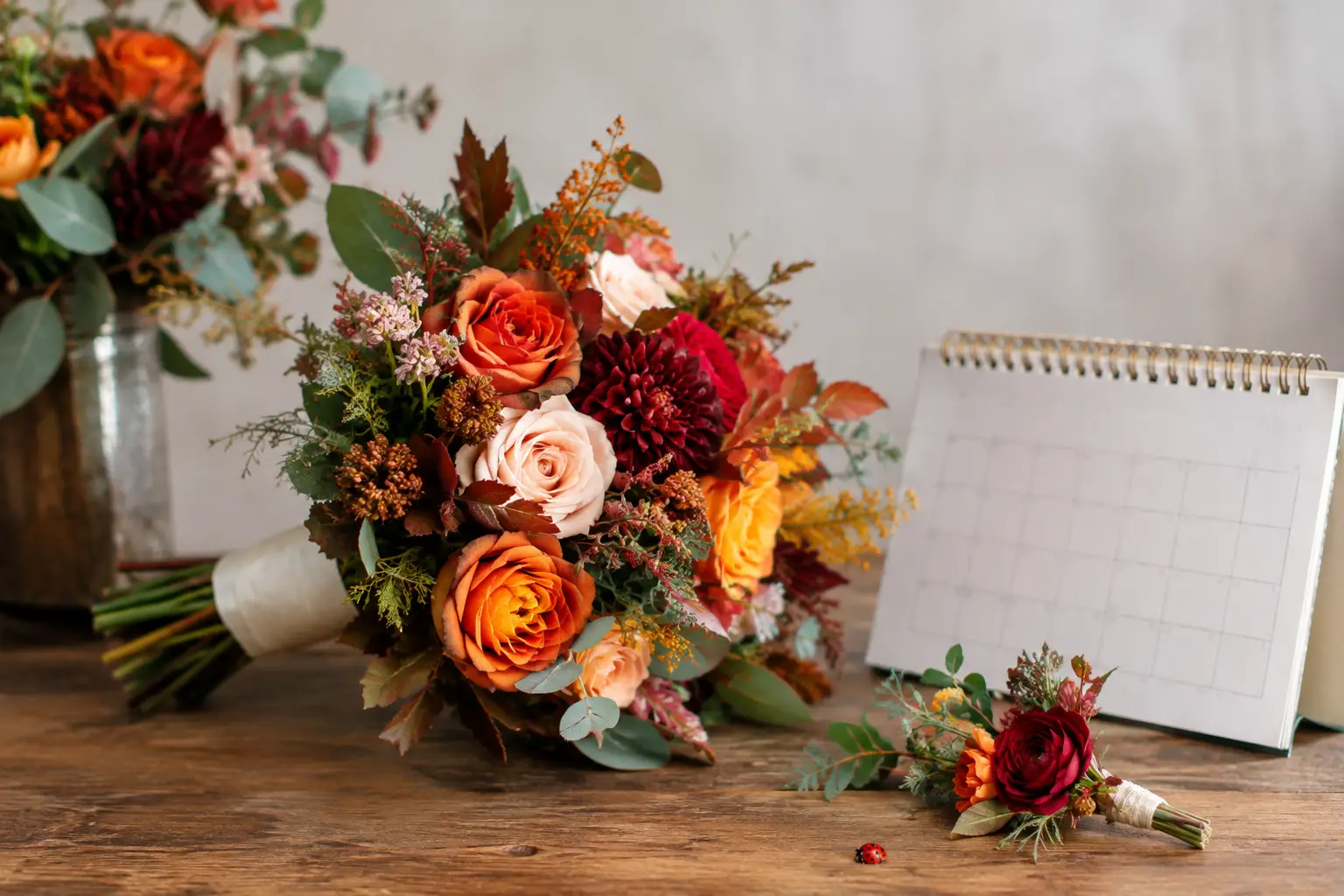
Your wedding flowers are not a last-minute accessory. They help set the feeling of the day, from the bouquet in your hands to the ceremony backdrop, reception tables, and the small personal flowers worn by the people closest to you. Knowing when to book wedding flowers gives you room to make thoughtful choices, protect your date, and enjoy the design process instead of rushing through it.
For most couples, the best answer is earlier than expected – especially when the wedding falls during a busy season, includes custom installations, or has a specific floral look in mind. The right timing also depends on your venue, guest count, budget, and how much floral design matters to your overall celebration.
When to Book Wedding Flowers: A Practical Timeline
A good rule of thumb is to contact a florist 9 to 12 months before your wedding. This is especially helpful for spring and fall weddings, popular Saturday dates, and celebrations with multiple floral moments. Reaching out early does not mean every stem, ribbon, and vase needs to be chosen immediately. It means you can reserve your date and begin working with a florist who understands your vision.
For a smaller wedding with bouquets, boutonnieres, and a few reception arrangements, 6 to 9 months is often a comfortable planning window. You will still have time to talk through your colors, select an overall style, and make design decisions after other details begin to come together.
If your wedding is only 3 to 6 months away, do not assume you are too late. Many beautiful weddings come together within that window. Your florist may recommend flexible seasonal flowers, adjusted installation plans, or designs that make the most of available blooms. The key is to reach out as soon as you have a date and venue.
Book 12 months ahead for high-demand dates and detailed designs
Consider contacting a florist about a year in advance if your date falls in May, June, September, or October. These months are popular for weddings in the Springfield area, and floral calendars can fill quickly. The same is true for holiday weekends and dates that overlap with major local events.
Early booking is also wise if you are dreaming about an arbor full of flowers, hanging installations, a flower-lined aisle, a large head-table arrangement, or designs for several spaces. These pieces require more than flowers. They involve planning mechanics, staffing, delivery timing, setup, and careful coordination with your venue.
Six to nine months works well for many weddings
Couples who have secured their venue and have a clear sense of guest count are in a strong position to book within this range. You may not know every linen color or place setting yet, and that is perfectly fine. A floral plan can begin with your date, venue, wedding party size, color direction, and priorities.
At this stage, your florist can help you decide where your budget will have the most visual impact. You may choose to focus on a memorable bridal bouquet and ceremony statement, then use candles, greenery, and smaller arrangements to carry the feeling into the reception.
A shorter timeline calls for flexibility, not panic
A wedding planned in a few months can still feel personal and polished. What changes is the amount of flexibility you bring to the process. Rather than requesting one exact flower that may be limited, share the feeling you want: garden-inspired, romantic, modern, colorful, soft and neutral, or richly textured.
A skilled florist can translate that direction into flowers that look beautiful in the season and fit your budget. Seasonal blooms are often fresher, more plentiful, and better suited to the weather than a design built around a single hard-to-source variety.
What You Need Before You Contact a Wedding Florist
You do not need a complete wedding binder before starting the conversation. In fact, waiting until every small detail is finalized can delay useful planning. Having a few core pieces of information is enough to begin.
Your wedding date and venue are the biggest priorities. Your florist will need to know whether your ceremony and reception are in the same place, what time the ceremony begins, and whether setup must happen during a limited access window. A rough guest count and wedding party count are helpful too, since they affect the number of centerpieces and personal flowers needed.
Bring a few inspiration images, but do not feel pressured to find a photo of your exact bouquet. Photos are most useful when they show what you respond to: loose garden movement, clean modern lines, a certain color palette, or a favorite flower shape. They give your florist a starting point, not a design requirement.
It also helps to have an honest budget range. Floral design is wonderfully customizable, but flowers, vessels, labor, delivery, setup, and installation materials all shape the final investment. A clear conversation early on lets your florist recommend choices that feel intentional rather than offering a plan that needs to be scaled back later.
Why Early Booking Makes the Experience Better
Booking ahead is not just about claiming a space on a calendar. It gives you a design partner while the rest of your wedding starts taking shape. Your florist can point out practical details that are easy to miss, such as whether a ceremony arrangement can be repurposed at the reception, how a bouquet will photograph against your dress, or which blooms hold up best for an outdoor celebration.
It also gives you time to make changes with less pressure. Perhaps you decide to add a welcome-table arrangement after seeing your venue in person. Maybe your guest count shifts, or you realize that family corsages matter more to you than favors. With time on your side, those adjustments can be handled with care.
For couples planning from out of town, early communication is especially valuable. RoseAmongThorns can help make the process feel personal even when you cannot stop by often, with clear conversations around your style, venue logistics, and the meaningful details you want included.
Seasonal Flowers and Your Wedding Date
Every season offers something special, but seasonality affects availability, cost, and the overall character of your flowers. Spring brings soft color and fresh movement. Summer offers abundant garden blooms and brighter color options. Fall can feel warm, textural, and deeply romantic, while winter weddings may lean into elegant whites, rich tones, evergreen, or sculptural details.
Some flowers are available much of the year, while others are more limited or change significantly in price. Weather and growing conditions can affect supply as well. That is why it is best to choose a color palette and floral style first, then let your florist select the most beautiful flowers available for your date.
This approach does not make your wedding less personal. It often makes it more distinctive. A bouquet designed around what is at its best can feel alive, natural, and perfectly suited to the season in which you are getting married.
Questions Worth Asking at Your Consultation
A wedding floral consultation should feel like a collaborative conversation, not a test of your flower knowledge. Ask how the florist approaches seasonal substitutions, how delivery and setup are handled, and what happens to ceremony flowers after the vows. If you are considering arches, hanging pieces, or rented vessels, ask what is included and what needs to be returned.
It is also helpful to talk about priorities. If your floral budget cannot cover every idea on your inspiration board, your florist can help you choose the moments guests will notice most. Sometimes that is a ceremony focal point. Sometimes it is an unforgettable bridal bouquet, a lush sweetheart table, or a reception entrance that welcomes everyone into the celebration.
If You Are Booking Wedding Flowers Late
If your wedding is approaching quickly, contact a florist now rather than waiting for a perfect plan. Share your date, venue, approximate budget, and the floral pieces you need most. Be open to recommendations and avoid assuming that a smaller timeline means settling for something generic.
A thoughtful florist can create a cohesive look by focusing on strong color, seasonal flowers, and a few well-placed designs. Keeping the plan focused may also make setup smoother and allow more of your budget to go toward the flowers that matter most to you.
The best time to book is the moment your date and venue are secure. Start the conversation early, leave room for artistry, and let your flowers become one of the details that makes your wedding feel unmistakably like yours.