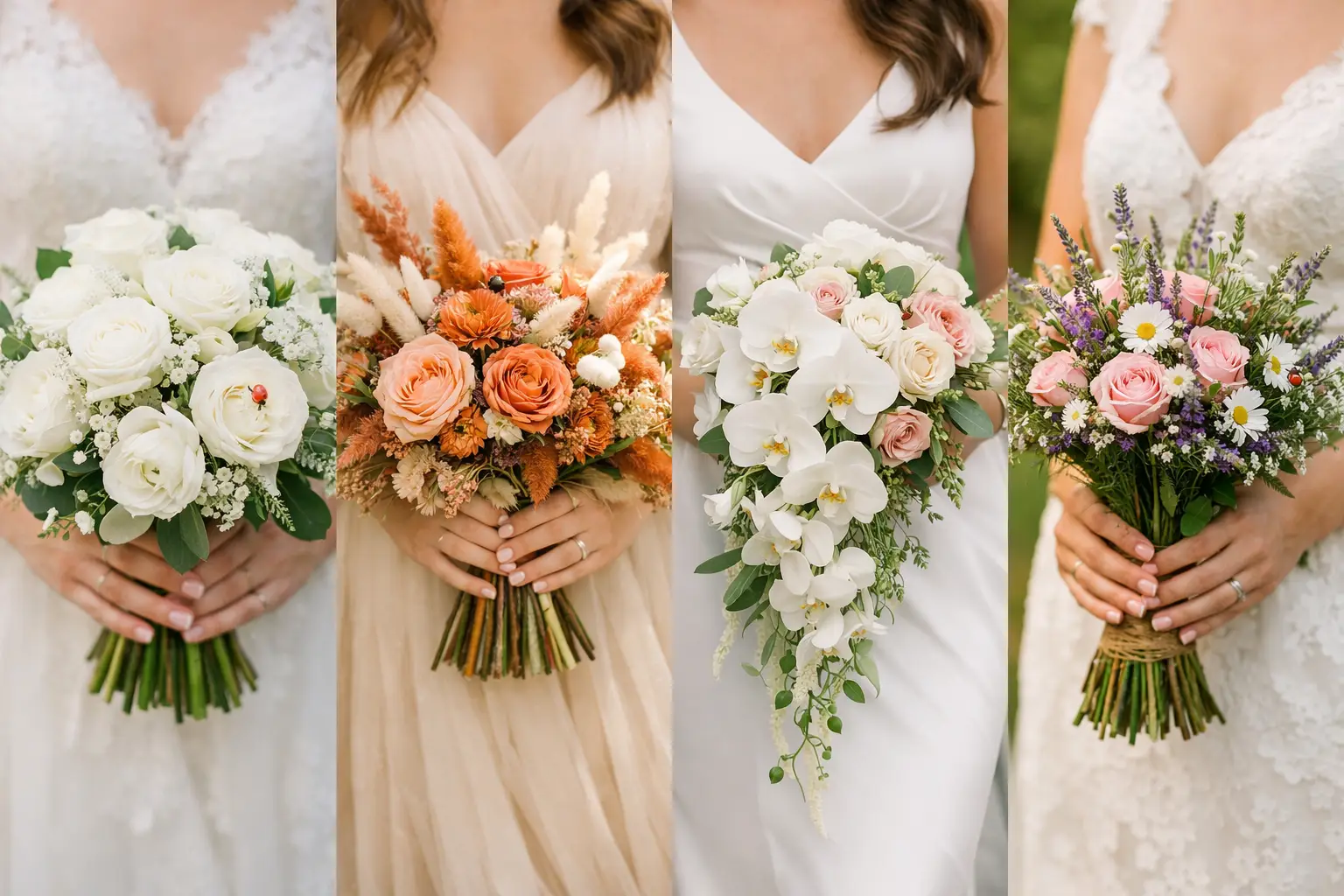
The bouquet is the floral detail that stays closest to you all day – in the first-look photos, walking down the aisle, during the ceremony, and in the portraits you will keep for years. These wedding bouquet style examples can help you name the look you love, then shape it around your dress, venue, season, and comfort. The right choice is not necessarily the largest or most elaborate bouquet. It is the one that feels like a natural part of your celebration.
Start With the Feeling You Want to Create
Before choosing individual flowers, consider the overall mood. A tailored ballroom wedding may call for a composed, polished bouquet, while a garden ceremony often welcomes movement, texture, and softly gathered blooms. Neither approach is more beautiful. They simply tell different stories.
Your attire matters, too. A sleek satin gown can carry a dramatic cascading design or a compact round bouquet beautifully. A gown with romantic lace, airy tulle, or delicate floral appliqué often pairs well with a loose garden-style arrangement. If your dress has a detailed bodice, a bouquet with a clean silhouette can keep the full look from feeling busy.
It also helps to think practically. You will hold this bouquet through photographs, greetings, and parts of the ceremony. A florist can adjust the scale, handle length, and flower choices so it feels comfortable in your hands rather than heavy or awkward.
Wedding Bouquet Style Examples to Consider
Classic round bouquet
A round bouquet is full, balanced, and neatly shaped, with blooms arranged in a soft dome. Roses, ranunculus, peonies, hydrangea, lisianthus, and spray roses are lovely choices for this style. It can be tightly composed for a formal look or slightly relaxed for a more current feel.
This is a wonderful option for traditional church weddings, black-tie celebrations, and brides who want their flowers to look timeless in every photograph. The trade-off is that a very symmetrical bouquet can feel more formal than free-spirited. Adding a few textured blooms or a subtle ribbon treatment keeps it personal without losing its classic shape.
Posy bouquet
A posy is a smaller, hand-held bouquet, usually rounded and designed with short stems. It is simple, charming, and especially suited to intimate ceremonies, courthouse weddings, and brides who prefer a lighter floral accent.
Do not mistake smaller for less special. A posy made with premium blooms, such as garden roses, anemones, or orchids, can feel wonderfully refined. It is also a thoughtful choice for petite frames or gowns with statement sleeves, capes, or dramatic accessories. The key is proportion: the bouquet should complement your look, not disappear in photos.
Loose garden-style bouquet
For couples drawn to a gathered-from-the-garden feeling, this style offers softness and movement. Garden bouquets often feature focal flowers alongside delicate supporting blooms, airy greenery, flowering branches, and textural accents. Think roses with sweet peas, ranunculus, scabiosa, delphinium, feverfew, or seasonal foliage.
The beauty of this design is its natural variation. Blooms sit at different heights, stems create gentle movement, and the arrangement feels abundant without being stiff. It suits estate weddings, outdoor ceremonies, vineyard celebrations, and any event with a romantic, organic point of view.
A loose bouquet still needs skilled construction. It should look effortless, but it must hold its shape, photograph well from several angles, and remain comfortable to carry. The most successful designs have movement with intention, not a random collection of flowers.
Cascading bouquet
A cascading bouquet flows downward from the hands, creating a graceful trail of flowers and greenery. It can be softly draped and delicate or bold and dramatic. Orchids, calla lilies, ivy, jasmine vine, ruscus, amaranthus, and trailing greenery are often used to create the cascade.
This style has a strong visual presence and is especially striking with simple gowns, long veils, and formal venues. A modern cascade is often more fluid and asymmetrical than the tightly structured versions many people remember from earlier decades.
Because the shape extends below the hands, balance is essential. A very long cascade may compete with a detailed skirt or feel cumbersome during a busy day. For many brides, a medium cascade gives the same romantic effect with greater ease of movement.
Presentation bouquet
A presentation bouquet is designed to rest along the forearm rather than be held upright by the stems. Long-stemmed calla lilies, orchids, delphinium, roses, or tropical foliage work particularly well. The effect is elegant, fashion-forward, and a little unexpected.
This bouquet style is ideal for a refined city wedding, an artful modern celebration, or a bride who favors clean lines over a traditional round shape. It also offers a lovely way to showcase spectacular stems without crowding the dress. The consideration is posture: this style looks best when carried intentionally, so it is helpful to practice holding it before the ceremony.
Crescent bouquet
A crescent bouquet curves gently outward on both sides, forming a loose half-moon shape. It can be airy and whimsical or sculptural and dramatic, depending on the flower selection. Delicate branches, vines, orchids, and directional greenery give this design its sweeping outline.
For brides who want something artistic but not as dramatic as a cascade, a crescent offers a beautiful middle ground. It works especially well with editorial-inspired weddings, garden venues, and gowns with fluid silhouettes. Since the outline is part of its charm, the flowers need to be selected carefully so the shape stays visible rather than becoming overly dense.
Single-flower or monochromatic bouquet
Sometimes the most memorable bouquet is built around one flower variety or one color family. A gathered bouquet of white tulips, a cloud of baby’s breath, a grouping of blush roses, or a collection of colorful dahlias can make a confident statement.
Monochromatic does not have to mean flat. A skilled design can create dimension through bud stages, petal shapes, and slight tonal shifts. This approach is especially effective when your wedding has a strong color story or when you want the flowers to feel modern and intentional. It may depend on seasonal availability, however, particularly if you have your heart set on a specific bloom in a specific shade.
Match the Bouquet to Your Season and Setting
Seasonal flowers bring their own character to a bouquet. Spring offers airy sweet peas, tulips, ranunculus, and peonies. Summer is generous with garden roses, dahlias, cosmos, zinnias, and hydrangea. Autumn invites warm-toned roses, textured grasses, chrysanthemums, and richly colored foliage. Winter bouquets can be romantic and elegant with roses, anemones, hellebore, evergreens, amaryllis, and berries.
Availability can vary, even within a season. Weather, growing conditions, and market supply affect what is at its best. Starting with a style and color direction rather than insisting on every exact stem gives your florist room to select fresh, beautiful flowers that achieve the same feeling.
The setting plays a role as well. An outdoor Missouri wedding in summer may call for flowers that hold up well in warmth and humidity. A compact bouquet with sturdier blooms can be more practical than a delicate design packed with flowers that wilt quickly. For an indoor winter celebration, you may have more freedom to use tender, fragrant blooms without weather concerns.
Make Your Bouquet Feel Like Yours
Personal details do not need to be obvious to be meaningful. A ribbon in a family color, a small heirloom pin secured to the wrap, a locket, or a fabric swatch from a loved one can make the bouquet feel deeply personal. Keep additions secure and modest, especially if your bouquet will be photographed close-up.
Your bouquet should also relate to the rest of the wedding flowers without matching every detail exactly. Bridesmaid bouquets can be lighter or simpler versions of your own. Boutonnieres may repeat one bloom or a textural element. Ceremony arrangements and centerpieces can echo the palette and mood, giving the day a connected look while letting each design do its own job.
When you meet with a florist, bring photos that show what you respond to, but pay attention to what you like about them. Is it the color palette, the loose shape, the size, the flowers, or the ribbon? Those details help turn inspiration into a custom design that fits your wedding rather than a copy of someone else’s.
At RoseAmongThorns, we believe wedding flowers should feel both beautifully made and genuinely personal. Choose the bouquet that makes you stand a little taller when you hold it. That quiet, happy feeling is often the best sign you have found the right one.